The last blog post, ended with light that blinds and cripples. Scripture does not shy away from this kind of confusion.
In the Pauline Author’s first letter to the Churches in Corinth, people were confused. Some were aligning themselves with Cephas, some with Apollos, others with Paul, and others still with Christ. Some may even have supposed that John the Baptist was the Christ — and that Paul, therefore was someone who also baptized (1Corinthians 1:11-13).
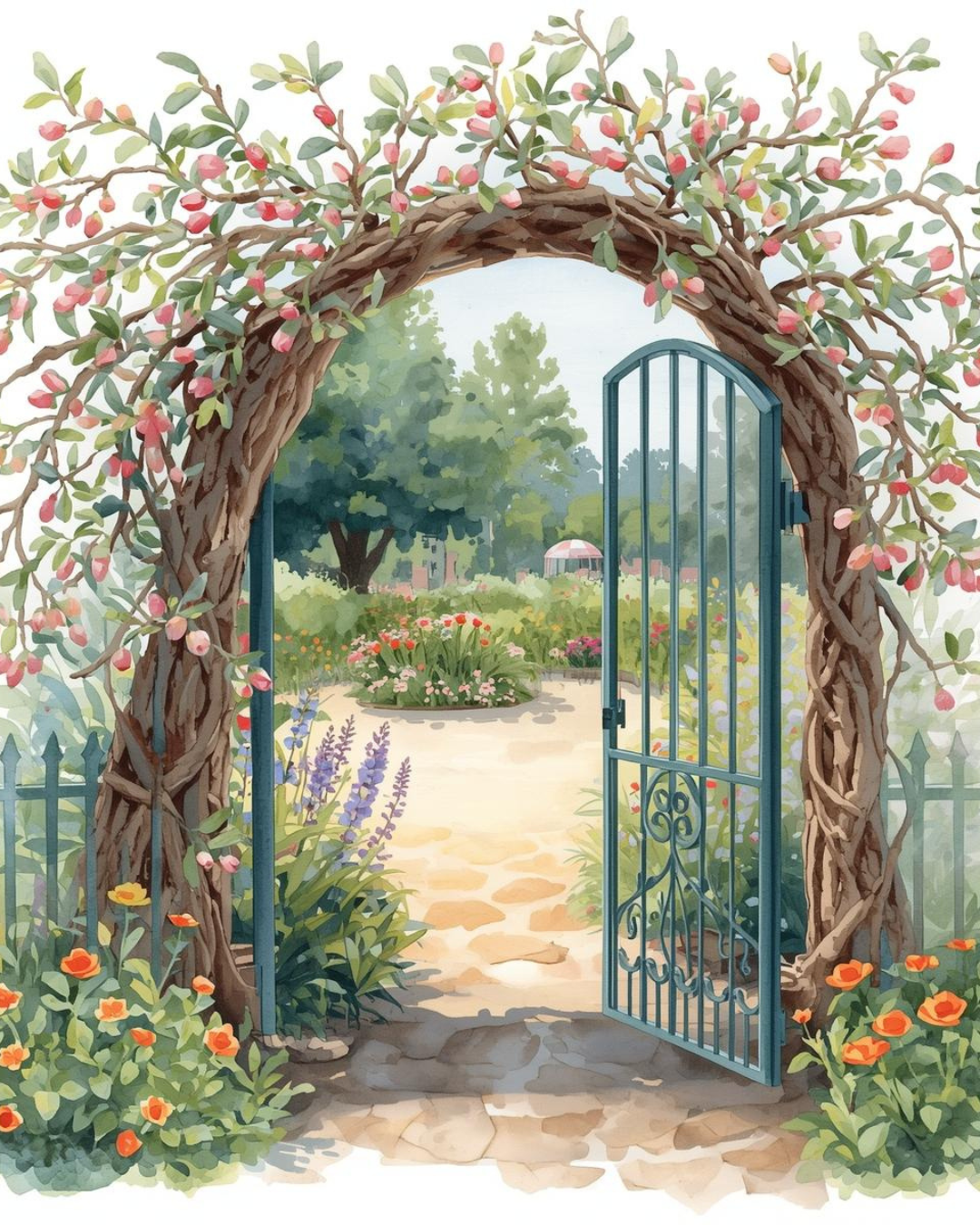
When Simon — called Cephas by some and Peter by others — stood with John in front of the Gate called Beautiful, they encountered a man who had been crippled from birth (Acts 3:1-6).
The season of Epiphany opens with the Baptism of Jesus in the Jordan by John, following the Holy Family’s journey to Egypt. Tradition remembers this journey led them to Alexander’s place or city—a formative setting shaped by dialogue, debate, and the practices of rhetoric and allegory within Greek and Roman culture
Might a place remembered as the nativity of Apollos be such a place—where Mary and Joseph’s marriage blossomed, and where a magnificent Light, born of their love and witness, began to testify to an eternal love for God and neighbour?
A man crippled from birth sits outside the Gate. The Pauline and Apolline witness to Jesus Christ — the Light born of Mary and Joseph’s marriage — has come into view, but its meaning has not yet taken root. Like all of us at birth, babies do not yet know how to walk and may reach out to shiny things to help them stand. So too, a young disciple of Jesus may see charity in the form of gold and silver — as if the keys to the kingdom Peter holds were made of gold and silver.
But parents and extended family members know when to let a child reach for shiny things — and when to draw them gently out of the way. What first steadies our crippled infant bodies cannot teach us how to walk. Standing is learned by watching, listening, and trusting the voices of those who have already learned to stand.
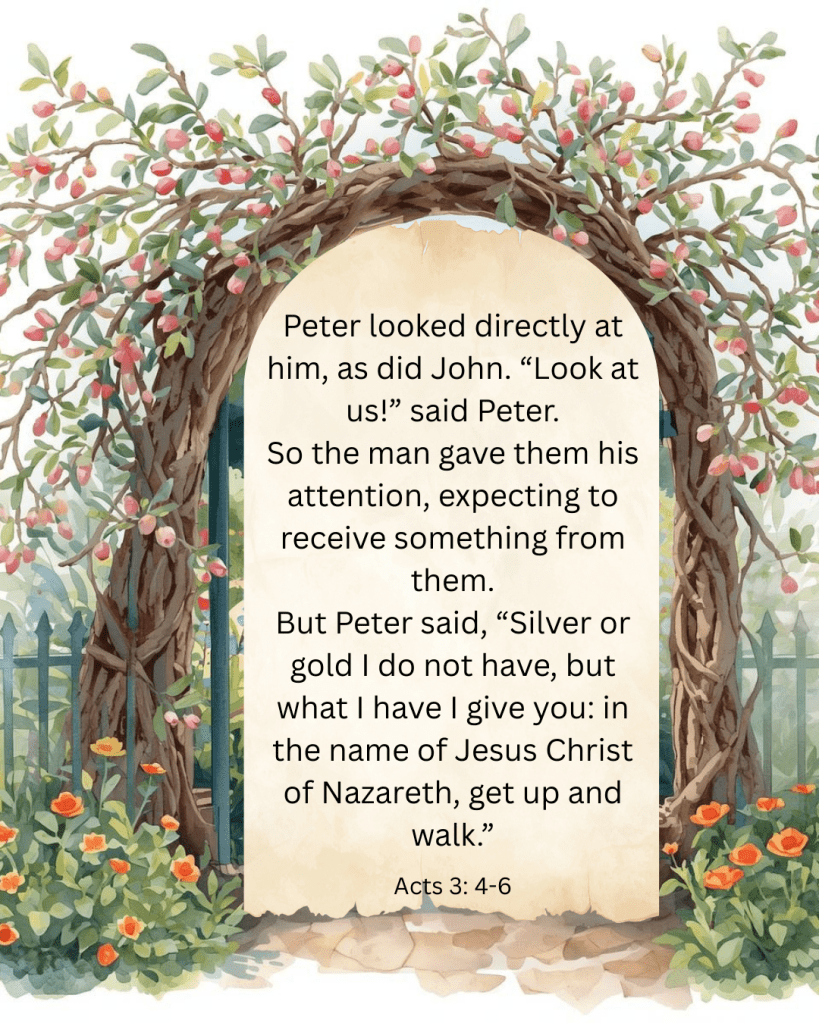
Peter gives what he has — in the name of Jesus Christ of Nazareth
- Taking him by the right hand, Peter helped him up, and at once the man’s feet and ankles were made strong. He sprang to his feet and began to walk. Then he went with them into the temple courts, walking and leaping and praising God.…
- When all the people saw him walking and praising God, they recognized him as the man who used to sit begging at the Beautiful Gate of the temple, and they were filled with wonder and amazement at what had happened to him.
- While the man clung to Peter and John, all the people were astonished and ran to them in the walkway called Solomon’s Colonnade.…(Acts 3:7-11).
Something remarkable has happened — not only that one once unable to walk now walks, but that there is no turning back or away. Newly strengthened, she remains clinging to Peter and John as they move together through a place thick with memory, a colonnade bearing Solomon’s name. The crowd follows, astonished. What began at the Beautiful Gate now draws many inward, as if the giving of the hand and the Name has opened more than legs — it has opened a way.
For as Jesus declares in John’s Gospel:
- “I am the Gate. Whoever enters through me will be saved.”
This is the second in a series of Epiphany reflections. In Epiphany III we follow the movement inward — from the healing of one crippled from birth to the significance of the place where the crowd gathers in wonder: Solomon’s Colonnade.
Discover more from Linda Vogt Turner
Subscribe to get the latest posts sent to your email.
 Linda Vogt Turner