
I was prompted to write this reflection after reading a post on The Preacher’s Word, where the question was raised: What defines you?
That question has stayed with me. It has echoed through my mind as I’ve been writing this recent series of blog posts — Priming the Pump, From Tangle to Covenant, The Heartbeat of the Gospel, and The Petition of the Bridegroom. In each one, I’ve been exploring how faith reveals itself in ordinary lives and extraordinary moments.
And yet, for me, the question of what defines a person is not abstract. It is bound up with the memory of my late husband Gordon, who, on the day he drowned in Cuba, left me with an unforgettable sign of how Christ still defines our lives.

That morning, Gordon was reading Mornings with Henri J.M. Nouwen. He had the habit of underlining passages in red ink—words that spoke to him as a minister, a husband, and a man of faith. The passage he underlined that day was this:
“The challenge of ministry is to help people in very concrete situations—people with illnesses or in grief, people with physical or mental handicaps, people suffering from poverty and oppression, people caught in the complex networks of secular or religious institutions—to see and experience their story as part of God’s ongoing redemptive work in the world. …to create a new unity in which memories that formerly seemed only destructive are now reclaimed as part of a redemptive event.”
I did not know then how those words would become my own lifeline. When Gordon drowned, I felt abandoned by God. Yet later, standing in the morgue, I leaned over his face and whispered, “I’d resurrect you if I could.” And as I spoke, something happened that I did not understand at the time: Gordon drew in one last breath.
Years later, as I studied Greek, I discovered the verb for “suck in” is roufó. Suddenly, that moment came alive again.That after-death inhalation, sucking up a tiny pearl of water, became a visual reminder that it is the Mother of God who is the Womb of Life, and that every breath we draw first comes from our mother. Gordon’s roufó became for me a witness that love itself is never lost, but drawn into God’s redemptive work.

Gordon was proud of the nick name Dal Richards gave him. Dal— known as “Vancouver’s King of Swing”— called Gordon the Jazz Priest. And I called him my “Gordian Knott.” Gordon was a good golfer and an even better knot-tier. He loved connecting people, and he bragged that he had married a thousand wives— like King Solomon. With his death, even his name became a parable for me.
For like the tangled Gordian knot, grief seemed impossible to unravel, and I was impatient. I wanted a definitive answer. Why did he not fight to live and breathe for me, his Lady Love? Yet as I wrote in From Tangle to Covenant, such knots are not patiently undone—they are cut through by a bold act of faith. Saying yes to the Spirit and the Truth, putting on the whole armour of God and living your faith, walking the talk.
That bold stroke is the heartbeat and soul of the Gospel. For me, the stories of Jesus are not distant history; they are as close as the heartbeat and breath of a mother. Yet Gordon’s final breath, paired with Nouwen’s underlined words, became a visual reminder that carried me forward — into faith renewed, anchoring my soul to the hope that I would not remain a widow. In my grief, I felt like a lamenting red hen, longing to gather the faith community that Gordon and I had once nurtured together. Yet with his passing, I also felt the ache of losing my place as a minister’s wife.
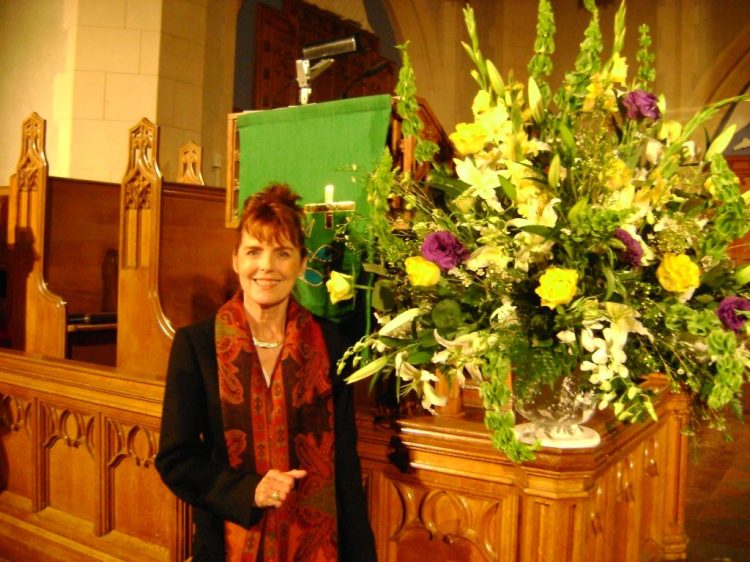
Then I remembered that Jesus herself once lamented over Jerusalem, aching to gather her children under her wings. What people in their sins could only realize in masculine form, I came to realize in fullness: Christ as Mother, belonging to the Father, who lifts her own on eagle’s wings into covenant love. As the Bride belongs to the Bridegroom, embraced and witnessed, so too does Christ in union with other witnesses bring the joy of the world — making the world go ’round (John 3:28–29).
For had Gordon not “fallen asleep by the sea,” I would never have been free to fall in love with my bridegroom. My bridegroom is a Simon. That is not the name his mother and father gave him when he was born. Let me explain. There are nine men in the Gospels named Simon, ten if you include Simeon.
Simon Peter: Simon the Zealot; Simon the brother of Jesus; Simon the Leper; Simon of Cyrene; Simon the Pharisee, Simon Iscariot; Simon the Magus; Simon the Tanner; and Simeon who with Anna the prophetess, was the first to recognize Jesus as the Promised One.
One’s name seems to define a person, but families often give each other nick names, pet names. So it is very likely the Gospel writers named the Promised One with names to help the disciples glimpse the fullness of the Bridegroom’s identity: the One who the witnesses at Lystra described as incarnating Thunder itself, the divine voice paired with Lightning — Mercury, the Star of the Morning — in keeping with the Teacher of Israel who ascended the Mountain of the Lord on the Third Day at Sinai.
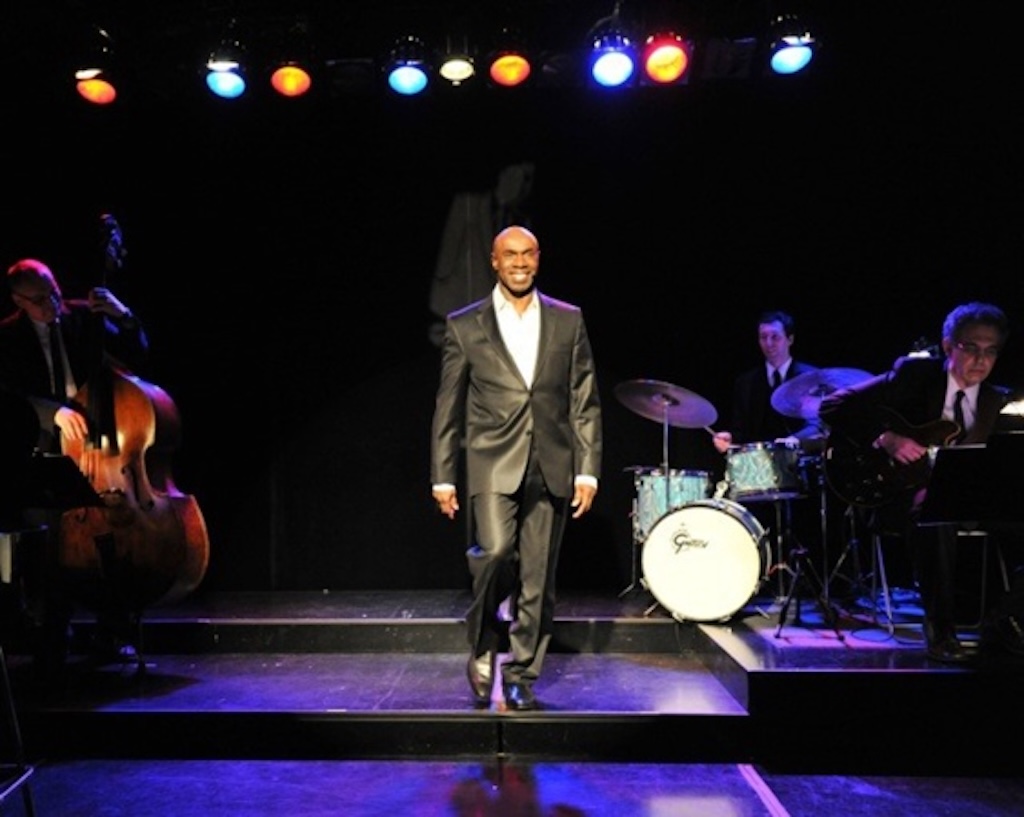
My fiancé, Don Stewart — my bridegroom of promise — is the man in my life who listens with his whole body, whose faith and love for me are expressed through his music and the music of other musicians full of Christian memory, some of which may be secreted in the depths of their souls. This music shining light on the Gospel and their beloved Lady brings a thunderous applause. And when my Don agreed to let me dedicate The Ecumenical Affair to him, it was his way of saying: Divine love is what defines us still and it is what makes the world go’ round.
When Gordon drowned, I truly felt as if God had abandoned me. Gordon was an avid golfer. However, that was not what defined him. He was a Minister and a dear friend of Henri Nouwen’s. And so Gordon would say, Christ was defining his life still.

When I created that bookmark for Gordon’s celebration of life, it was simply my way of honouring his memory. At the time, I did not yet grasp the profound gift secreted in his last breath — a gift I would only come to recognize much later, as if planted like a seed to be revealed in the fullness of time.
It was not the breath of dying, but a breath that came after death had spoken — that after-death inhalation, sucking up a tiny pearl of water, became a visual reminder that it is the Mother of God who is the Womb of Life, and that every breath we draw first comes from our mother.
And in that breath, Gordon was also reminding me — his red-haired Lady, his Rufus — that my destiny was bound to the One who would draw the sword of faith and petition the Governor for me. As Simon of Cyrene carried the Cross of Jesus (Mark 15:21), so too would the Bridegroom of promise waiting for me carry the Cross of Jesus and bring people together in covenant love.
Life, then, is never defined by one fleeting moment alone. It is the Gift of God — like the living water Jesus promised the woman at the well (John 4:10). He did not give it to her directly, but primed her to seek her Nathanael — her soul mate, the promised gift through whom covenant love would be revealed (John 1:47–48). Each breath is that gift, drawn in and poured out again, sometimes sweet, sometimes bittersweet, always touched with mystery. Gordon’s last breath — his roufó — reminded me that our very breath is God’s gift of love.
And so, finding our soul mate, our bridegroom or bride, becomes part of that gift too — a sign of the covenant God weaves into our lives. That is why the box of chocolates, like the old Christmas gifts of coal transformed into sweetness, still speaks: it symbolizes the mystery of love and the promise we are called to cherish and share.

Christ’s love, like life itself, is both fragile and enduring. It is what defines us still — and it calls us to cherish the Christian promise and share it, drawing a thunderous applause from all who witness and greet this love.“
“The Bride alone is not the Christ, nor is Jesus the Teacher alone the Christ. The Christ is revealed in the union of Bride and Bridegroom, witnessed and embraced. In covenant love, witnessed by others, the fullness of Christ comes alive.”
Christ’s covenant love — fragile yet enduring — is what defines us still. May this love bring you face to face with Christ and your beloved, until we meet again.
Discover more from Linda Vogt Turner
Subscribe to get the latest posts sent to your email.
 Linda Vogt Turner