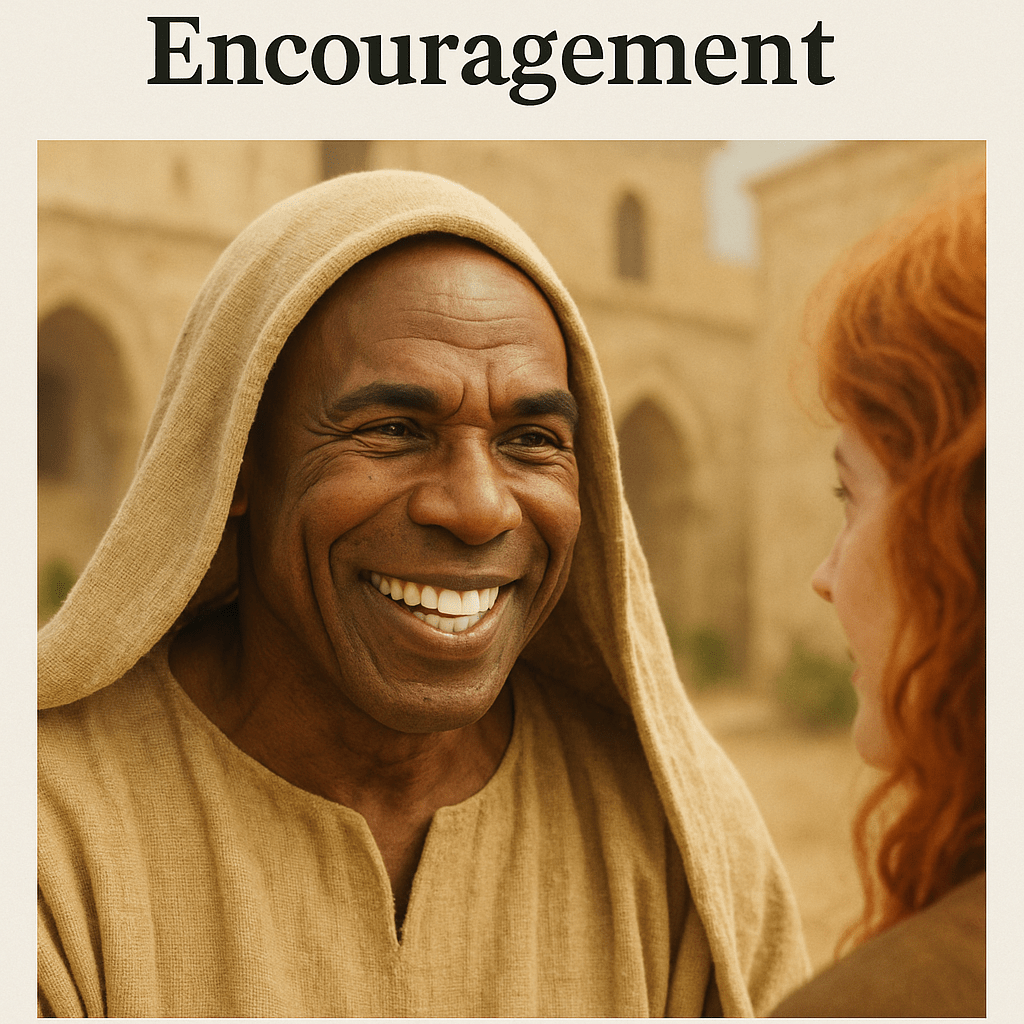
Attending a little worship service yesterday at Bethany-Newton United Church in Surrey, I heard Luke’s rendition of John’s story—the one where Simon Peter casts his nets into the deep. Only this time, I heard it in a slower, more pondersome way.
That word—pondersome—is rarely used today. But I’m using it on purpose.
Because it is important to think deeply about Simon and Jesus, out there on the edge of a pond—the one that came to be known as the Prince’s Garden, or more commonly today, Lake Gennesaret.
And perhaps Luke is recording this story as if Simon were just a fisherman, tossing out literal nets. But what if Simon was something more—a bard on the beach, an entertainer or street magician, eking out a living in the public houses and tide-washed corners of the valley?
So perhaps Luke envisions Simon as the Son of Man, as the bard who wove together networks of artists and seekers, not strands of rope. One whose very fissure—that inner cleft where longing lives—was a lonely space: the very place the Cross, like the Amygdala, would one day fill.

For falling in love is a marvelous thing. It does bring heartache and sorrow at times. But when two people cleave to one another—truly commit—they discover the greatest lesson of all: to love and be loved in return—as the bard Nat King Cole once crooned.
Other times when I’ve heard this story, I saw Simon simply as an ordinary fisherman, not as a bard, but merely as someone fishing and mending nets, and Jesus standing on the shore as an authoritative teacher. I saw two boats and just assumed this was a very typical and familiar scene.
More importantly, I missed the moment when Jesus got into Simon’s boat.
But yesterday, it was like cataracts had cleared my vision. I suddenly heard the phrase “in the same boat” to mean more than just being together. That phrase called out to me and pushed me to enter into Simon’s struggle, to see the plight of the poor and experience the unpleasant situation of those who are eking out a living, out on the margins—at the edge of a garden that belongs to the Prince.
And maybe, just maybe, it also means entering into the boat with those whose lives have been marked by judgment—because of their race, or their poverty, or their relationships.
Perhaps even with someone whose mother-in-law is ill, because of Jesus’ radical teaching that to divorce and remarry is to commit adultery—which would have made Simon’s household not just humble, but scandalous.
Now, dear reader, you might be wondering:
“Linda, what are you smoking? This story has nothing to do with divorce. Why go there?”
But let’s not forget: The Law of Moses said adulterers should be stoned. Still who ever heard of fishermen catching fish with stones? And yet, didn’t Jesus—when confronted with this law—turn it on its head?
“Let the one without sin cast the first stone.” When no one could, Jesus the male teacher turned to the woman brought in for questioning and asked:
“Has no one condemned you?”
“No one, sir,” she said.
“Then neither do I. Go and sin no more.”
In the very next verse, Jesus—the one identified as the Christ—by the crowd who do not know the Law, says:
“I am the Light of the World.”
To those who see and hear John’s testimony of John 3:28 clearly, the one the crowd identified is the Christ—the Bride who belongs to the Bridegroom.
But Simon? Simon wants to make sure everyone knows he’s a sinful man—engaged to the Master.
Maybe that’s why the boat feels too heavy, too pondersome to bear.
Maybe the disciples still think the Master must be a man—not the woman who has mastered the art of homemaking, of storytelling, of seeing light in dark places.
And storytellers and bards? They know how to listen to lyrics—how to hear what others miss.
🎶 Consider the lyrics of Bob Dylan’s “Rainy Day Women”:
“They’ll stone you when you’re trying to be so good…
They’ll stone you just like they said they would…
But I would not feel so all alone—
Everybody must get stoned.”
At first glance, many hear this and think of getting high—stoned on Mary Jane, commonly thought of as weed—that calms the nerves and sparks insight.
But those who have learned their lessons well know another kind of stoning:
The kind that marks the end of the single life—the old pursuit of fishing for a mate, a one night stand, or merely wandering alone in the dark, no longer half-hearted, but fully committed.
The kind of stoning that prepares a soul to be born again by the Light of the World, not just committed to a partner—but committed to Christ the Rock, the adult male Jesus—the Bride chose to be the foundation of her Church.
And if we linger here a moment longer, we’ll notice: there isn’t just one boat in Luke’s story. Luke tells us there were two boats, and the sons of Zebedee were in the other—James and John, whom Jesus would later call the Sons of Thunder.
The Sons of Thunder is not just a poetic nickname, but a revelation:
Thunder is the Our Father—the one who listens to and answers Lightning’s spark, who reverberates with creative power as He did so in the beginning:
“Let there be light.”
Can you hear Simon? The one who fell at Jesus’ feet and cried, “Depart from me, Master, for I am a sinful man.”
Surely this cry was not cowardice. It was Thunder responding with humility to Lightning—not fleeing the Light, but trembling before it. Pondering and reflecting on the streams of living water filling his dark life…asking how can this be?
And yet in time, Simon comes to himself and accepts that he is the voice that booms forth from a dark cloud full of rain. He is the one whose soul was full of pondering. Who felt truly humble, unworthy, poor and powerless.
He is the Rock and the fissure, where the Cross plants herself in hope. He is the one who denied that “anyone” could grasp the nature of God.
And yet, when Simon heard the Rooster crow, and felt the testimony of John stir deep within his soul, he knew—he was being called as the God Father of a multitude, and to don his morning coat, his wedding garment that he had once taken off.
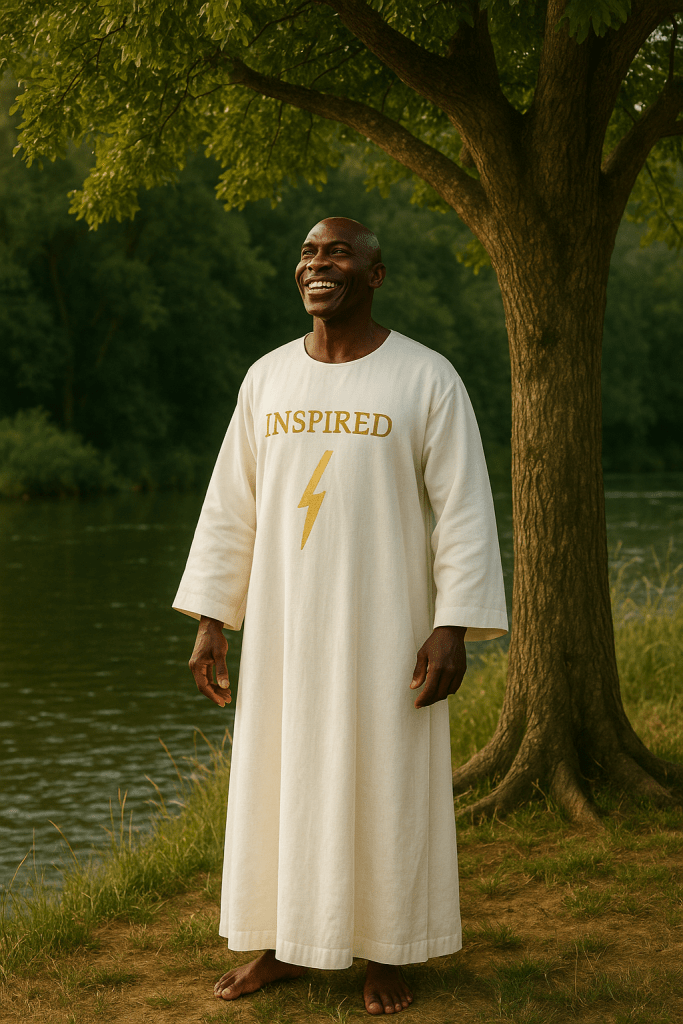
He was going to get stoned
and not feel so alone.
He was going to bring hope to rainy day women
He was going to get married.
Discover more from Linda Vogt Turner
Subscribe to get the latest posts sent to your email.

