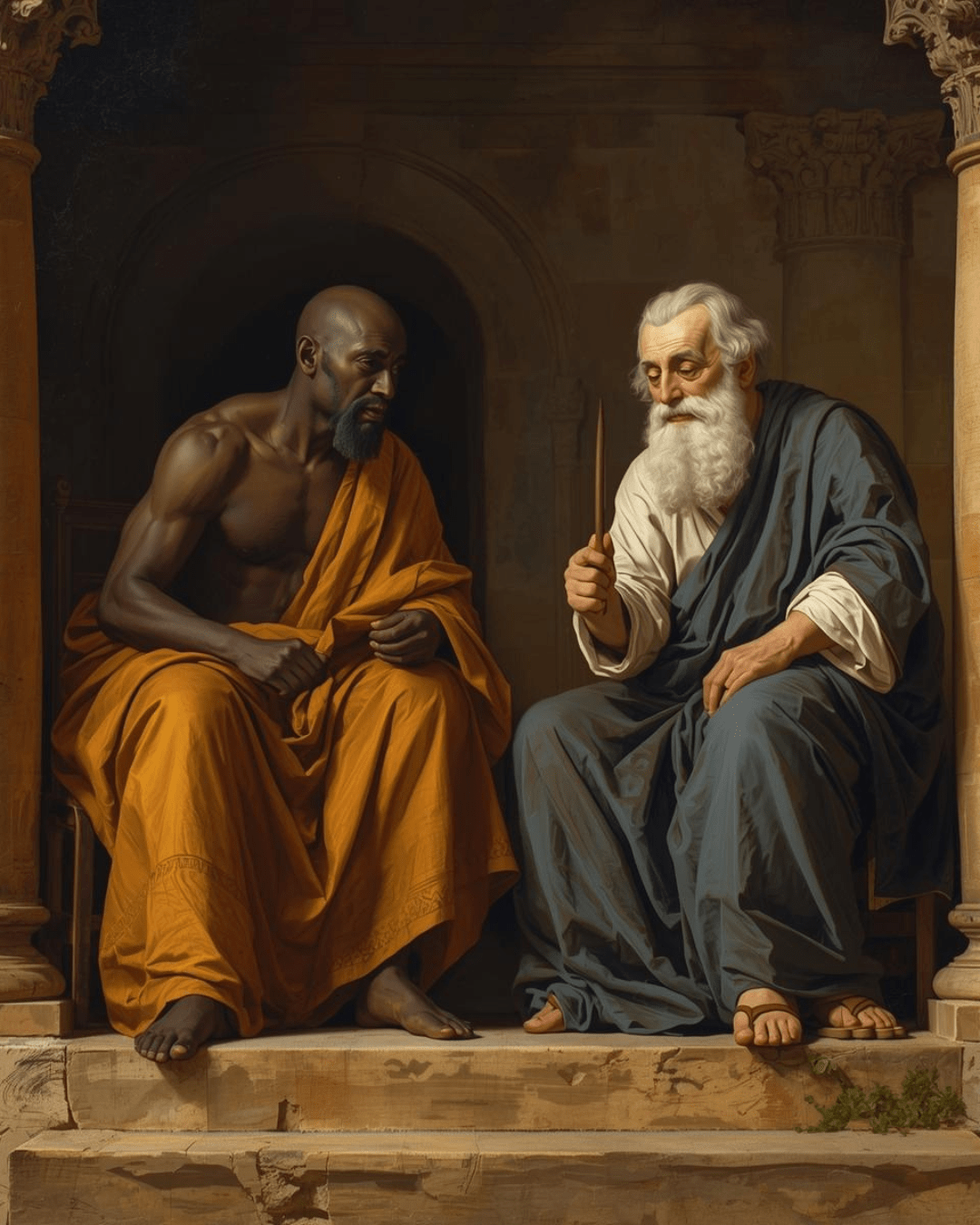
The authorities were disturbed and perplexed.
How could laymen — men without formal authority, men who did not wear the robes of the priestly class — speak with such confidence, such clarity, and such authority?
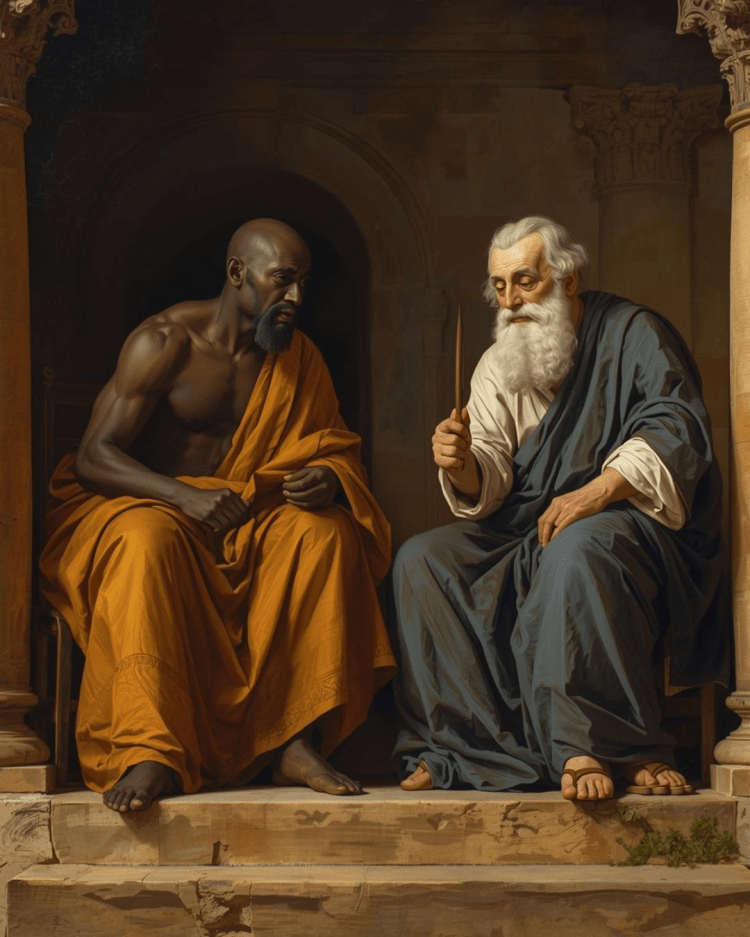
In the order of the Temple, Peter and John were supposed to be followers, not teachers, servants, not leaders. Yet the crowd treated them as witnesses to something greater than any institutional power.
What perplexed the ruling class was not simply how the crippled one now walked. It was the claim that this miracle revealed the fulfillment of messianic prophecy — a fulfillment that seemed to inaugurate a new kind of authority, grounded not in rank, or hierarchy, but in a living encounter with Christ: the Bride belonging to the Bridegroom, as testified by John.
In the logic of the authorities, if John had lost his head, had he truly died? How could he now be seated here with Peter — filled with the Holy Spirit, full of ancient memory, wisdom and authority?
Greatly disturbed they had Peter and John taken into custody overnight.
“What shall we do with these men?” they asked. It is clear to everyone living in Jerusalem that a remarkable miracle has occurred through them, and we cannot deny it. But to keep this message from spreading any further among the people, we must warn them not to speak to anyone in this name.” (Acts 4: 16-17)
Yet the message spread anyway. This was no mere act of charity — five thousand people were fired up even as the authorities tried to silence it. Was this merely the rumour of the grapevine, or a faithful allegiance to the authorship of the Holy Spirit?
And so the authorities and those in their allegiance remained perplexed:
“…They could not find a way to punish them, because all the people were glorifying God for what had happened. For the man who was miraculously healed was over forty years old.” (Acts 4: 21:22)
Truly this was — and is — the Crux of the Matter.
How could this Healed Crippled One, be the crucified one? Was not Jesus the Crucified One, under forty years old pinned to the Cross — to the Amygdala the prophets declared the Lord was watching over? (Jeremiah 1:11-12)
______________________________________________________________
This is the fifth in a series of Epiphany reflections. Epiphany VI, turns to the Crux of the Matter: how the forty-year-old Crippled One is brought into public view as the Crucified Bride — when Peter takes her hand —a truth the authorities want to keep sacred.
If you would like to receive the next reflection, be sure to subscribe here.
Discover more from Linda Vogt Turner
Subscribe to get the latest posts sent to your email.
 Linda Vogt Turner