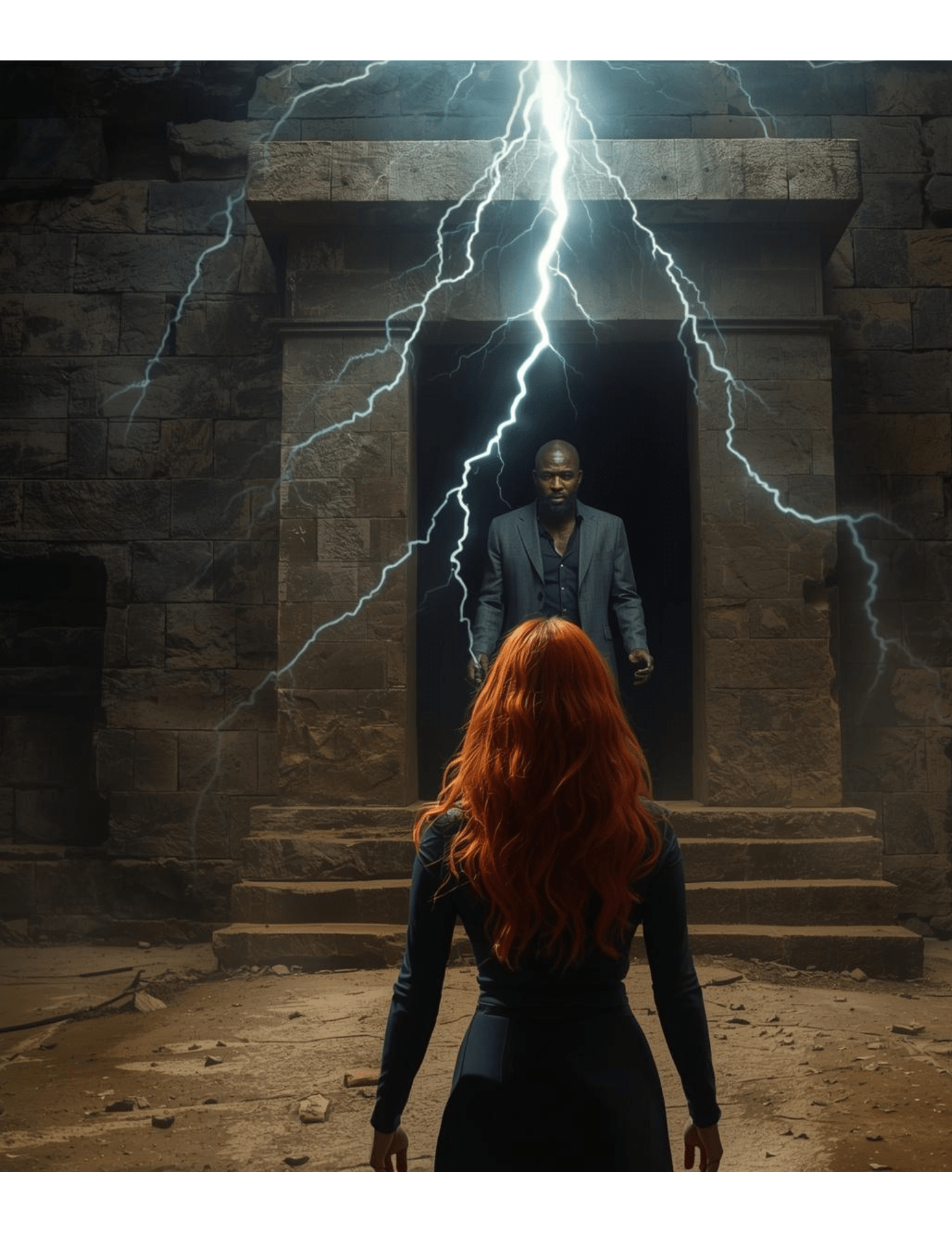
After the Sabbath, at dawn on the first day of the week, Mary Magdalene — the other Maria — came to the tomb.
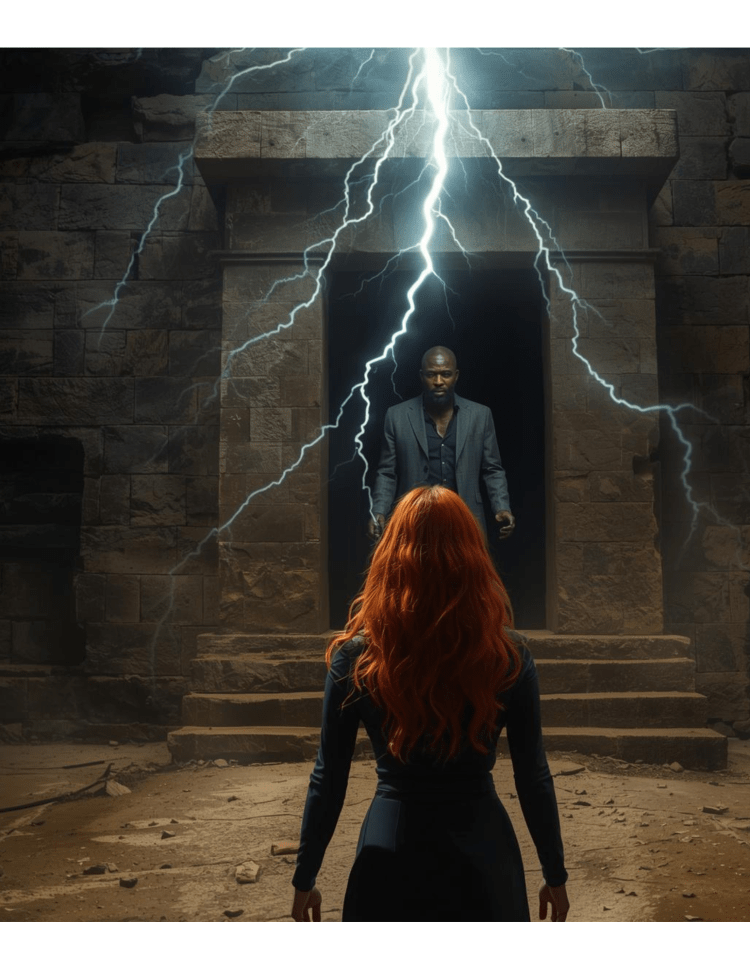
And suddenly there was a great earthquake. For an angel of the Lord descended from heaven, rolled the stone away and sat upon it. The Angel’s appearance was like lightning with clothes white as snow.
Yet where was thunder?
Lightning and thunder belong together, although the light is seen first and the sound follows.
In Genesis on the first day, the earth was formless and void, and darkness was over the surface of the deep. And Ruah— the feminine Hebrew word for Spirit — hovered over the waters.
As Ruah hovers, electrical charge builds within this watery cloud. When the charge reaches a critical threshold, it discharges — lightning flashes, and thunder sounds.
And God said,
“Let there be light.”
And it was so, the first day.
Yet the third day is crucial — for on that day — the land takes form.
And God said,
“Let the waters under the heavens be gathered together into one place, and let the dry land appear.”
And it was so.
Then God said,
“Let the earth bring forth vegetation — plants yielding seed, and fruit trees bearing fruit.“
And it was so.
Notably, the sun does not appear until the fourth day — working in concert with thunder and lightning.
Then, on the sixth day, Man is formed — male and female, in the image and likeness of God — distinct, and created in a relationship with each other and the created order.
And like the days of Solomon — Man — male and female — lived in safety, every man under his vine and under his fig tree.
To this day, lightning and thunder together contribute to the fixation of nitrogen — making thunderstorms essential for natural soil fertility.
As the Woman Jesus called Mariam —Maria, the Magdalene watched the tomb,
there was a great earthquake, for an angel of the Lord descended from heaven, rolled away the stone, and sat on it.
His appearance was like lightning, and his clothes were white as snow
If the dead do not rise, then Christ has not been raised, and the Angel — the Messenger seated on the Stone — appears as a false witness.
And so when the chief priests and elders hear the report that the Angel — appearing like lightning, with garments white as snow — spoke to the women and said:
“Do not be afraid, for I know that you are looking for Jesus, who was crucified. He is not here; He has risen, just as He said!
Come, see the place where He lay.
Then go quickly and tell His disciples, ‘He has risen from the dead and is going ahead of you into Galilee. There you will see Him!
— See, I have told you.”
They give the soldiers money to say that his disciples came by night and stole Mary’s Lord.
For in John’s Gospel, Jesus the Teacher finds Mary weeping — looking for her Lord.
As the Woman Jesus called Mary Magdalene saw that the stone had been removed from the entrance, she ran to Simon the Man Jesus called Cephas. For he was to be the foundation stone — of the resurrected household of God. She also ran to the other disciple whom Jesus loved.
Thus the Woman Jesus called the Magdalene — recognized for centuries as being the Bride of Christ — is alarmed.
For the Rabbi, the Teacher of Israel, the forerunner had testified saying:
“I am not the Christ, but sent ahead of Him. The Bride belongs to the Bridegroom. The “philos” the beloved friend of the bridegroom stands and listens for him, and is overjoyed to hear the bridegroom’s voice. “
This beloved friend of the bridegroom said this before his head was taken, placed on a plate, and his body laid in a tomb, a house of the dead.
The Woman Jesus called the Magdalene watched as:
The veil of the temple was torn in two from top to bottom. The earth quaked, and the rocks were split. The tombs broke open, and the bodies of many saints who had fallen asleep were raised.
After Jesus’ resurrection, when they had come out of the tombs, they entered the holy city and appeared to many people.
But before Jesus’ resurrection, Mark reports that Joseph of Arimathea craved the body of Jesus (15:43 KJV).
And yet John reports it is both Joseph and Nicodemus who wrap the crucified body of Jesus in anointed linen cloths.
While Mark reports that it was Joseph who placed the crucified body of Jesus in his own new tomb that he himself had cut into the rock — then rolled a stone against the entrance of the tomb — and went away.
The Woman Jesus called the Magdalene weeps when she hears that the Stone — sealing the body of Jesus in Joseph’s tomb — has been taken away.
As she weeps, two angels appear to her — within the Tomb, after Simon and the Beloved Friend of Jesus have entered and left.
The angels ask her why she is weeping.
The Angel of the Lord appeared to Moses — the Great Teacher — in the burning bush, seated upon the mountain of the Lord, revealed God Himself.
Later the Great Teacher instructed his smiths to beat sheets of gold to make a branched lamp-stand for the Holy Place.
The priests kept this lamp lit day and night —to resemble the branched amygdala, the almond bush that their Teacher met on the Mountain of God.
Even though Simon the Man Jesus called Cephas and Jesus’ beloved friend John had departed from the Tomb, and did not yet understand—from the Scripture—how Jesus had to rise from the dead, they had already been set apart—to watch and to bear witness, as angels do.
They were called to watch over — and to accomplish — Jesus’ mission.
For in the book of Jeremiah, the prophet says:
And when the word of the LORD came to me, asking, “Jeremiah, what do you see?” “I see a branch of an almond tree,” I replied.
“You have observed correctly,” said the LORD, “for I am watching over My word to accomplish it.”
Was not Mary the Woman Jesus called the Magdalene? Was she not committed to the Word of the Lord and the accomplishment of the Amygdala?
And yet —Mary given the title The Magdalene — stood outside the tomb weeping.
And as she wept, she bent down to look into the tomb, and she saw two angels in white sitting where the body of Jesus had lain, one at the head and the other at the feet.
“Woman, why are you weeping?” they asked.
“Because they have taken my Lord away,” she said, “and I do not know where they have put Him.”
When she had said this, she turned around and saw Jesus standing there. But she did not recognize that it was Jesus.
“Woman, why are you weeping?” Jesus asked. “Whom are you seeking?”
Thinking He was the gardener, she said, “Sir, if you have carried Him off, tell me where you have put Him, and I will get Him.”
For previously, Jesus had taught the disciples to pray:
Our Father who is in the heavens, hallowed be Your name. Your kingdom come. Your will be done, as in heaven, also upon earth.
And the night when Jesus promised that the Advocate, the Holy Spirit would reveal Himself only to them, Jesus said:
You heard Me say, ‘I am going away, and I am coming back to you.’ If you loved Me, you would rejoice that I am going to the Father, because the Father is greater than I…
for the prince of this world is coming and he has no claim on me.
But I do exactly what the Father has commanded Me, so that the world may know that I love the Father. Get up! Let us go on from here…
I am the true vine and my father is the keeper of the vineyard — the gardener, the husbandman.
Thus as she wept,
Jesus said to her, “Mary.”
She turned and said to Him in Hebrew, “Rabboni!” (which means “Teacher”).
“Do not cling to Me,” Jesus said,
“For I have not yet ascended to the Father. But go and tell My brothers, ‘I am ascending to My Father and your Father, to My God and your God.’”
And yet —
Just before Israel was to enter the Promised Land — Joshua given the mantle of the Rabboni, the Great Teacher of Israel— told Israel not to worship the gods of other nations, saying:
“Rather, cling tightly to the LORD your God as you have done until now.”
With the hope of the festival of the Third Day — when Moses the Great Teacher ascended and spoke with God, and God answered in thunder — Mary the Magdalene, repeated what the Rabboni had said to her:
“Go and tell my brothers: I am ascending to My Father and your Father “— Christ, the everlasting Father — the Husbandman who belongs to you.
______________________________________
This is the sixteenth in a series of Epiphany reflections that paved the way for the Cross — and now reflects on the events in the season of Easter.
The next Epiphany reflection turns to the reinstatement of the Man Jesus called Cephas, who was also called Peter, and Simon the Fisherman.
For Simon, like Jonah of old had been reluctant to take up the Cross of Jesus. And yet Simon does have a change of heart — and does what Jeremiah and his angels do — watch over and accomplish Jesus’ mission.
If you would like to receive the next reflection, be sure to subscribe.
Discover more from Linda Vogt Turner
Subscribe to get the latest posts sent to your email.
 Linda Vogt Turner