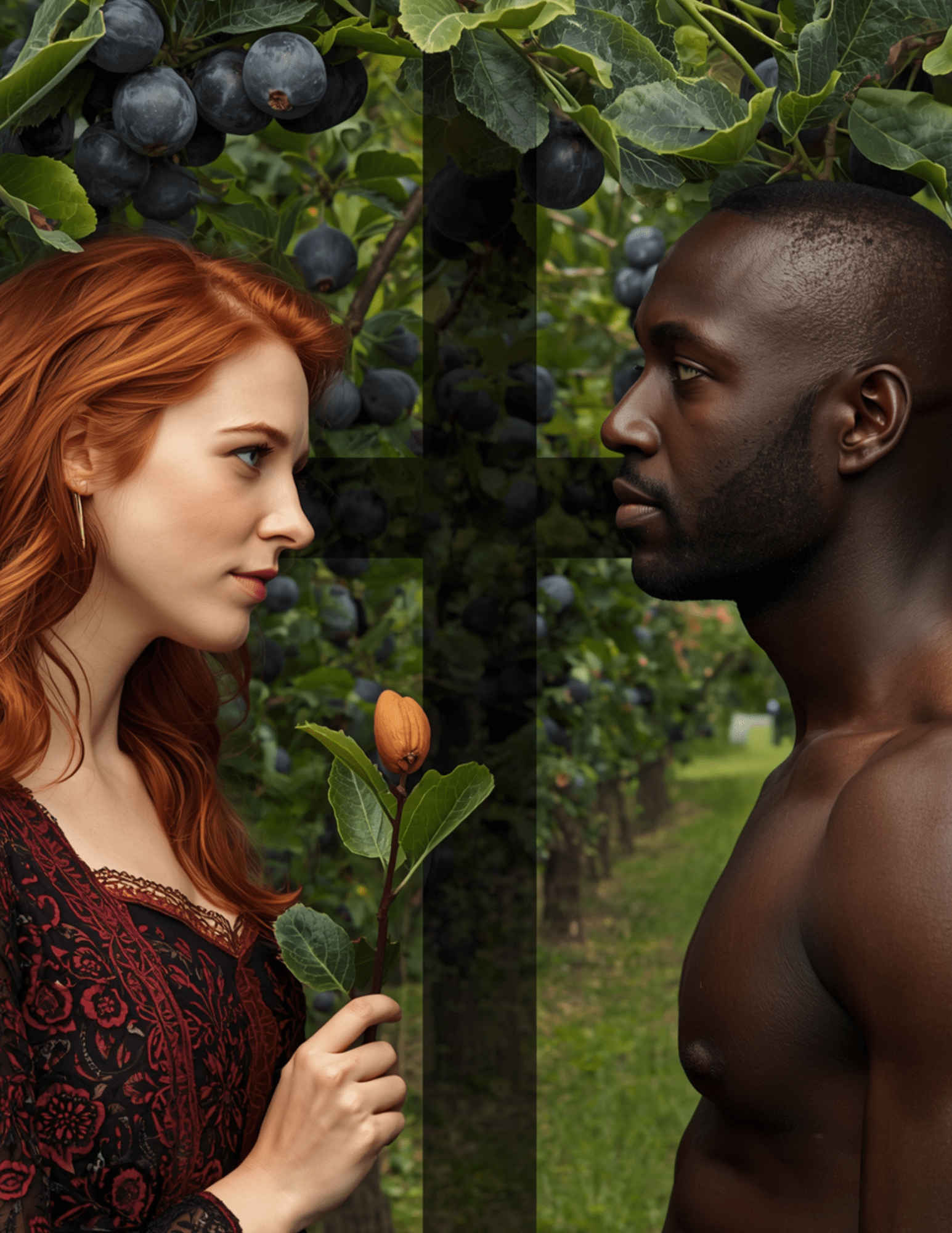
In the book of Ruth, Boaz, her redeemer, invites Ruth to dip her morsel into his dish of vinegar.
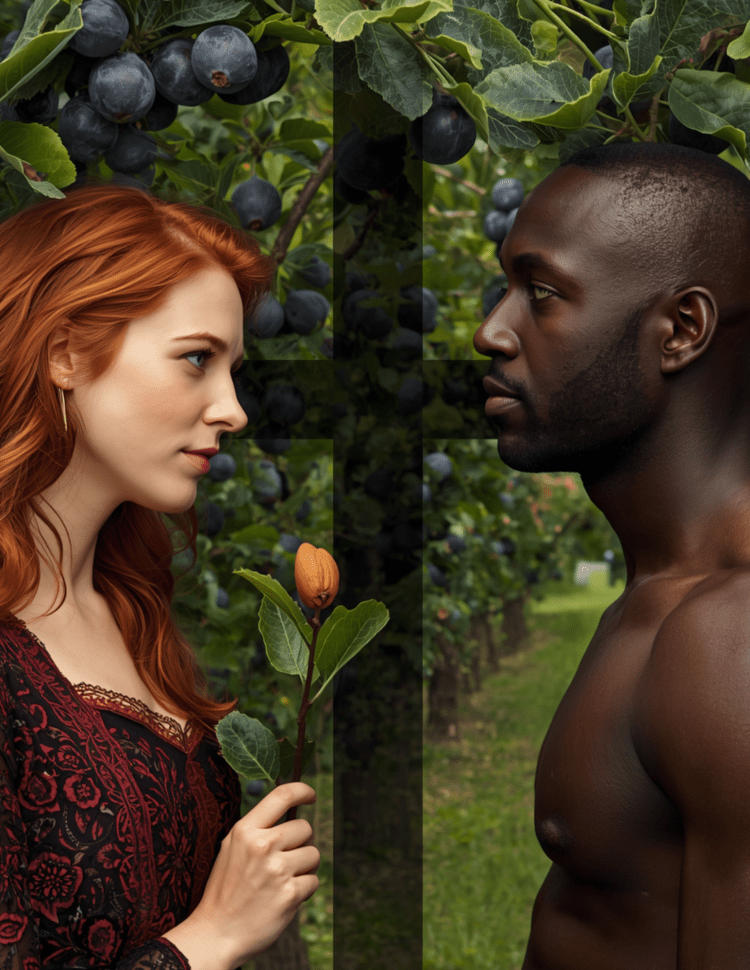
As the story unfolds, Boaz provides for Ruth, leaving portions of his harvest for her to gather. In time, he redeems her as his wife, and their son, Obed, enters the lineage — the bloodline — from which Jesus is born — a bloodline poured out and shared in the cup of communion.
When Boaz invited Ruth to eat “bread” and dip it in vinegar, he instructed his servants to give her a portion from his own table — a customary harvest provision, offered in hospitality to a foreigner gleaning among the reapers, a welcome refreshment.
This detail is easily overlooked — especially by those who do not recognize the significance of sharing a customary refreshment with one who is not of one’s own blood — one’s kin. Yet it comes just before her redemption.
What, then, might such a gesture mean when seen in the light of the Cross?
In the Gospel of John, the Rabbi called John — the forerunner and Teacher of Israel — gives this testimony:
“A man can receive only what is given him from heaven. You yourselves can testify that I said, ‘I am not the Christ, but am sent ahead of Him.’ The bride belongs to the bridegroom.
The friend of the bridegroom stands and listens for him, and is overjoyed to hear the bridegroom’s voice. That joy is mine, and it is now complete. He must increase; I must decrease.”
The Teacher of Israel, the Rabbi called John by his disciples, does not claim the Bride as his own. He stands watching, having heard the Bridegroom’s voice, and rejoices — bearing witness to what has been given, and to what is yet to be accomplished.
In that same Gospel, a woman comes to a well at noon to draw water — alone, while others rest or share the midday meal. There she meets the Teacher, who speaks of the Gift of God — given from heaven.
He says:
“If you knew the Gift of God — And — who is asking you for a drink, you would have asked Him —and — He would have given you water that would create in you a fountain — springing up into eternal life.”
The Woman did not yet know who the Gift of God was. She wondered if he might be the Christ — her true husband, the promised Bridegroom.
Would the water the Teacher offered be like a prime for a pump — cleansing her heart and sanctifying her — as the Bride belonging to the Bridegroom?
As she listened and drank in what had been given, the promise began to take form in her — the water this Teacher of Israel spoke of creating in her an eternal spring.
For when this Teacher met Nathanael, Nathanael asked:
“How do you know me?”
The Teacher of Israel replied,
“I saw you under the fig tree.”
Nathanael said to him,
“Rabbi, You are the Son of God, You are the King of Israel.”
And when the Woman drank this in, she began to realize the Truth and the Spirit, for she knew Nathanael’s name means the Gift of God.
From the beginning, the Spirit — Ruah — the Mother Spirit — hovered over the waters.
And God the Father thundered,
“Let there be light?
— And there was lightning.
Together, Father and Mother speak — and life is given.
On the third day, God spoke and brought forth life — plants, trees, and living water.
On the fourth day, the sun appeared.
And on the sixth day, Man — Adam and Eve — was formed — male and female — in the image and likeness of God.
In the Gospel of John, Jesus took the role of a homemaker — as a mother — and fed five thousand men — women and children — on a grassy hillside.
Some, like the green grass they sat upon, received what was given without recognizing how it was given or who was giving it. Others saw this as a prophetic sign — as if Jesus were the Prophet they had been waiting for, to make straight what had become bent — confusing her with John, who makes straight the roads.
For the Hebrew people and their ways had again been bent — as one long bent over — crippled under those who ruled over them.
Though divided as to who was the Christ, all were happy with the bread and fish they received.
Yet with so many gathered, they heard the words being spoken, but did not truly see the One who gave — the Mother who brings the energy — knows how to prepare, preserve and increase what is received, adding vinegar and salt to flavour and preserve.
For such bread received in thanksgiving — honours both the Mother and the Father — as the two speak as One.
“Truly, truly, I tell you, it was not Moses who gave you the bread from heaven, but it is My Father who gives you the true bread from heaven. For the bread of God is He who comes down from heaven and gives life to the world.”
“Sir,” they said, “give us this bread at all times.”
Jesus answers:
“I am the bread of life. Whoever comes to Me will never hunger, and whoever believes in Me will never thirst.
On the sixth day God said:
“Let Us make man in Our image, after Our likeness, to rule over the fish of the sea and the birds of the air, over the livestock, and over all the earth itself and every creature that crawls upon it.”
So it was on Friday — the sixth day — that Jesus was lifted up in public, bound to a wooden cross — refined and tested with iron.
But before this happened, Jesus was mocked, beaten and stripped — and all who watched saw such humiliation and turned away.
As they led Jesus out, the soldiers seized Simon, called the Black, coming in from the countryside — taking him to be a Cyrenaic — and laid the cross upon him to carry behind Jesus.
For when Jesus spoke of the path of suffering, Simon had said:
“Lord! This shall never happen to You!”
And Jesus replied:
“Get behind Me, Satan! You are a stumbling block to Me.
For you do not have in mind the things of God, but the things of men.”
And so Simon, once thinking as a Cyrenaic and not like God, is compelled to carry the cross of Jesus.
Yet Simon is the Anchor, the Rock of Jesus’ soul.
For it was Jesus — waiting to be glorified — who said,
“Whoever believes in Me will never thirst,”
and now from the Cross says:
“I thirst.”
Now Simon is also identified as being the Father of Alexander and Rufus-the red-haired one. So it is difficult to see Rufus as the chosen one – the Mother of the Lord.
And so is it any wonder that some of those leading and accompanying Jesus out to Golgotha — the place called the skull, did not believe Jesus would die and rise again to life on the Third Day.
So is this why Jesus is being offered a sponge dipped in vinegar?
Was this merely to mock Jesus? Or was this gesture a public proposal — reminiscent of Boaz inviting Ruth to dip her morsel into his cup of vinegar?
For earlier, Jesus had refused the wine mixed with gall. Now, Jesus receives the vinegar.
And bowing her head, says:
“It is finished.”
And committing her Spirit into the hands of the Father, Jesus takes a final, single breath — and yields up her life into the Father’s hands.
For Jesus had said:
“You are the salt of the earth.”
And in the second book of Kings, Elisha went out to the spring, cast the salt into it, and said:
“This is what the LORD says: ‘I have healed this water. From now on neither death nor barrenness shall come from it.”
And so salt came to signify faithfulness — a covenant not corrupted, but preserved.
And Simon, who was compelled to carry the cross of Jesus, is now called to bear what has been placed in his hands — if he be willing — not as one thinking as a Cyrenaic, but as one tested and refined with iron — called to stand as the Bride’s Rock — and become salt for the earth.
___________________________________________
This is the fifteenth in a series of Epiphany reflections paving the way for the Cross.
What has been given — in bread, in vinegar, and in the last single breath — now rests in the hands of the Father, to be fulfilled on the Third Day.
In the season of Easter, the next Epiphany reflection turns to the Garden of the Tombs.
If you would like to receive the next reflection, be sure to subscribe.
Discover more from Linda Vogt Turner
Subscribe to get the latest posts sent to your email.

