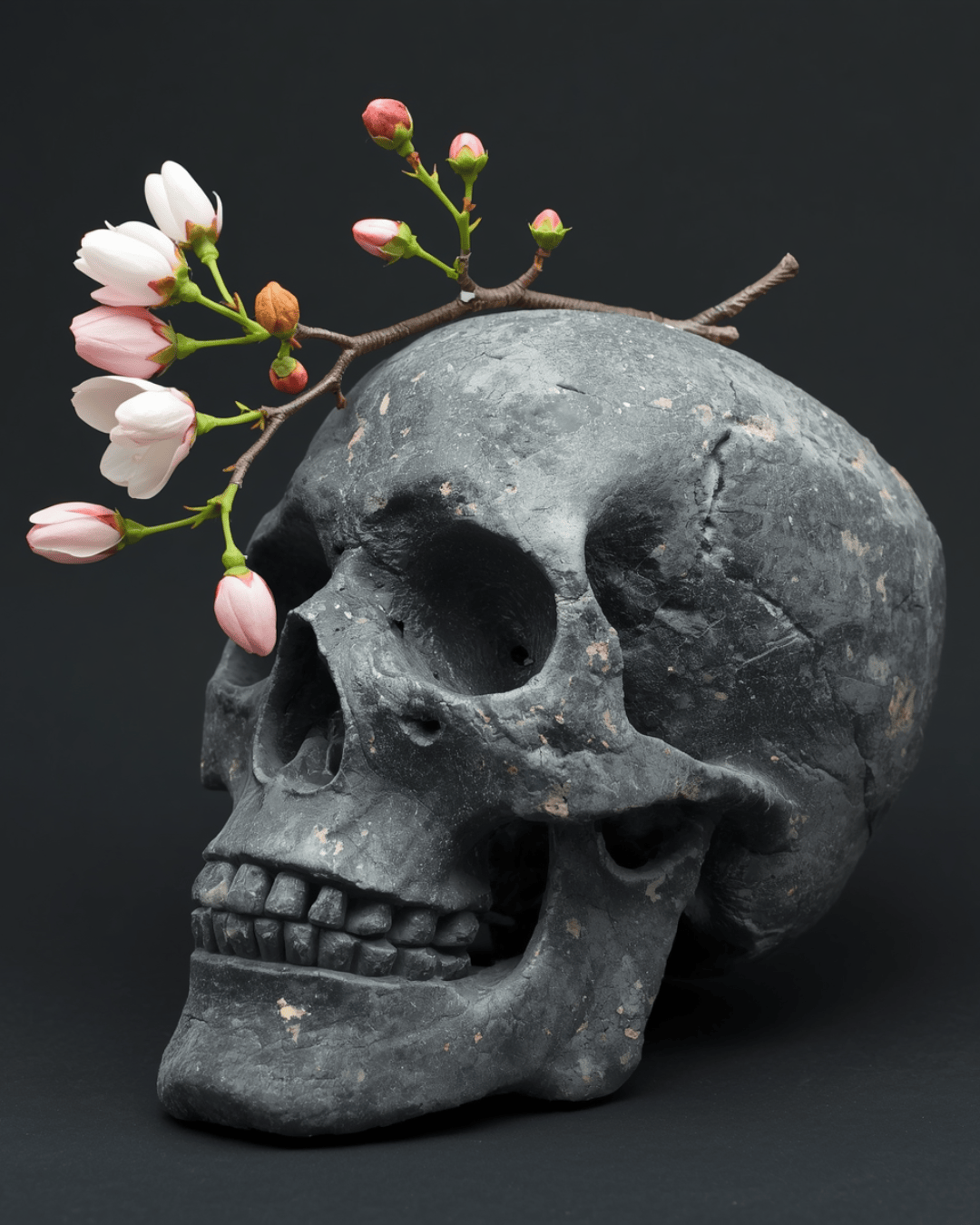
Why did artists place a skull beside—or even in the hands of—Mary Magdalene? Was the skull only an emblem of mortality and a reminder of Golgotha, “the place of the skull”? Or has the Magdalene been clinging to the stone the builders rejected—the stone over which they stumbled?
Until the revised Roman Calendar took effect in 1970, the Western Church had long identified her with the woman who anointed Jesus, the woman who loved much, and the Bride who sought her Bridegroom in the Song of Songs.
Today, the prevailing belief is that Christ never married. So was the Woman Jesus called the Magdalene left standing alone in the Garden, without a husband? Is this why the angels and the Man Jesus called Teacher say to her:
“Woman, why are you weeping?” (John 20:15)
And is this why the Teacher—the Man she turns toward and calls Rabboni—says:
“Do not cling to me.” (John 20:17)?
Does this have anything to do with the Man Jesus called Simon—the one chosen as the Rock, the foundation stone of the church, the Jesus family?
Would you like to continue contemplating?
This reflection continues on my main website, lindavogtturner.ca, in “Did Jesus Let Peter Remain a Friend with benefits?” At the end of the complete reflection, you will also find an invitation to read my new book, Epiphany Journey: Christmas to Pentecost, together with instructions for receiving a private reading link.
Epiphany Journey grew from my nineteen-part Epiphany blog series, but it is not simply a collection of those original posts. The reflections have been revisited and revised, then brought into dialogue with nineteen full-page images and the passages of Scripture accompanying them. Together, they serve as icons and thresholds—visual and biblical doorways guiding the reader toward the epiphany the original series was seeking to bring into view.
Discover more from Linda Vogt Turner
Subscribe to get the latest posts sent to your email.

