The world tells the Crucifixion as a story of blood and nails, of bodies beaten and left to die on a Roman cross. It is told this way to make us shudder, to show us how horrible sin is when people turn violence into spectacle.
The Heartbeat of the Gospel: Communion incarnate in Mary Magdalene, the Amygdala
But God’s way is not the world’s way.
When I look at the Crucifixion, I do not see dripping blood and gore. I see a love story. I see God watching over the Word to bring His promise to fruition. I see memory awakening, relationships healed, and covenant love revealed.
The Third Day at Sinai (Exodus 19:19) echoes here: the fire, the lightning it sparks the Teacher of Israel—Moses—alive again with the Woman of Lightning and the Man of Thunder. What the world frames as death, God frames as reunion and resurrection.
The Crucifixion is not the end of a life.
It is preparation for Communion with God.
It is the heartbeat of Life Herself, coming alive to give us Eternal Life within a covenanting, loving relationship—as Bride and Bridegroom, as Teacher and Friend, and as all their blood relations.
So when I come to the table of the Lord, I do not taste death.
I taste Life—the heartbeat of the Gospel Herself.
The bread is not simply broken flesh—it is the shared loaf of covenant love, the heartbeat of Life pulsing through us as we eat together. The cup is not dripping blood—it is new wine poured out, memory restored, covenant joy, and the fire of love that binds us as Bride and Bridegroom, as Teacher and Friend, as Promise kept to Spirit.
Communion is not a funeral ritual.
It is a wedding feast.
It is Life remembered, Life reborn, Life eternal—Life alive forever.
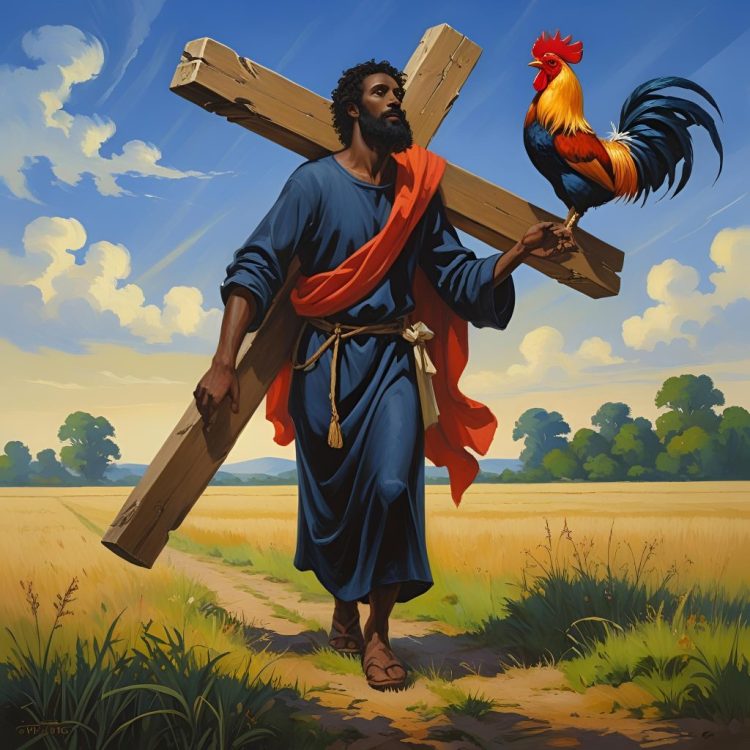
The Cross is the Amygdala—the heartbeat of the Gospel, revealed in Mary the Magdalene, whose very name means the Amygdala. Here sinful thinking dies, fear and the demons of possession lose their grip, the world’s memory is healed, and covenant love is reborn. Sinners—and Simon’s love for the Woman Jesus and for those needing to see covenant love alive—compel Simon to carry the Cross of Jesus and reveal himself as Christ the Everlasting Father (Mark 15:21).
When I look to the Prophet Isaiah, I see Christ defined in fourfold form (Isaiah 9:6):
Mary the Magdalene — Wonderful Counsellor: the Amygdala, Queen of Heaven, Lightning, reigning beside the King of Kings.
Simon the Peter, son of Jonah — Everlasting Father: the Rock, called by love to serve; compelled by sinners, he took up the Cross of Jesus to save the world.
Jesus the Teacher — Prince of Peace: Moses reborn, John the Baptist’s head restored and released from prison forever; speaking peace again in our midst, trampling down death by death, and bestowing life to those in the tombs.
The Lady of Bethany (Martha) — the Almighty housewife: tending the oikumene, the household of God, watching over covenant love with grace and hospitality.
At the table, we receive not only forgiveness; we are invited into divine union eternal: God in us and we in God. The heartbeat of Life Herself still beats within us, carrying us forward into eternal covenant love—with Herself as the Cross, the Amygdala, the world’s memory, the Wonderful Counsellor.
With the words “Do this in remembrance of me,” we are called to remember that John the Baptist is the Forerunner—who calls us into repentance and points us to the She who hovered and the He who thundered: “Let there be light.”
We remember that John is the Teacher, the one who calls the disciples to testify, saying: “I am not the Christ. But I have been sent ahead of Him. The Bride belongs to the Bridegroom” (John 3:28–29).
With this post, I break the bread and pour the wine. I do not stage a funeral; I open a wedding table. The Cross is the Amygdala—her memory restored, new wine poured out, covenant love restored, and God’s children reborn.
I drink in Life—the heartbeat of the Gospel, restoring my soul and all those sharing this cup with me.
I invite you to listen for the heartbeat of the Gospel—the Amygdala, memory restored, covenant love reborn. Not a platonic affection, not a fleeting passion, but LOVE that is eternal—LOVE compelled to reconnect with those it has cherished from the beginning of time. For if the dead do not rise again with the heartbeat of the Gospel, Christ will not come again.
Or do you see what I see — the Magdalene’s heart and her heartfelt letters that turn bitter wine sweet?
The prophet Jeremiah speaks a word of hope that echoes through the ages:
“But this is the covenant which I will make with the house of Israel after those days,” declares the LORD, “I will put My law within them, and on their heart I will write it.” —Jeremiah 31:33
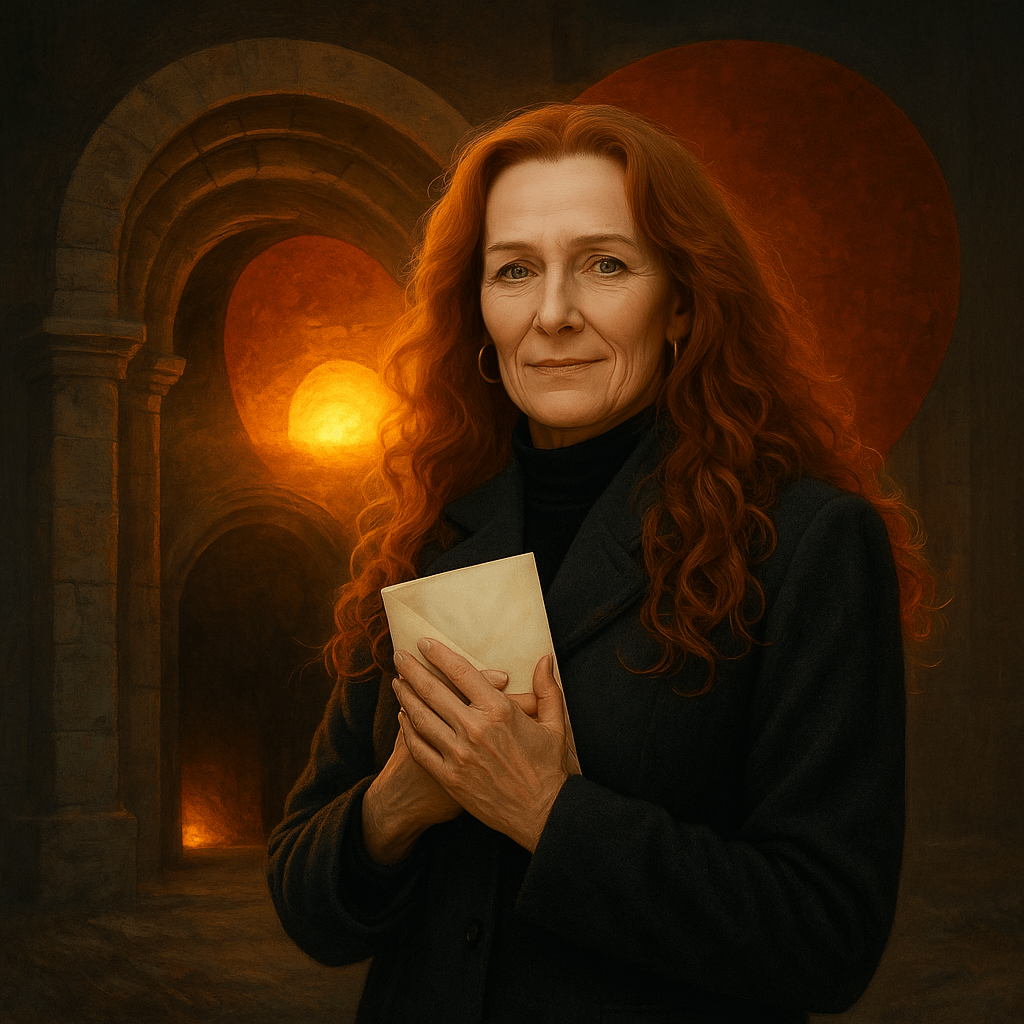
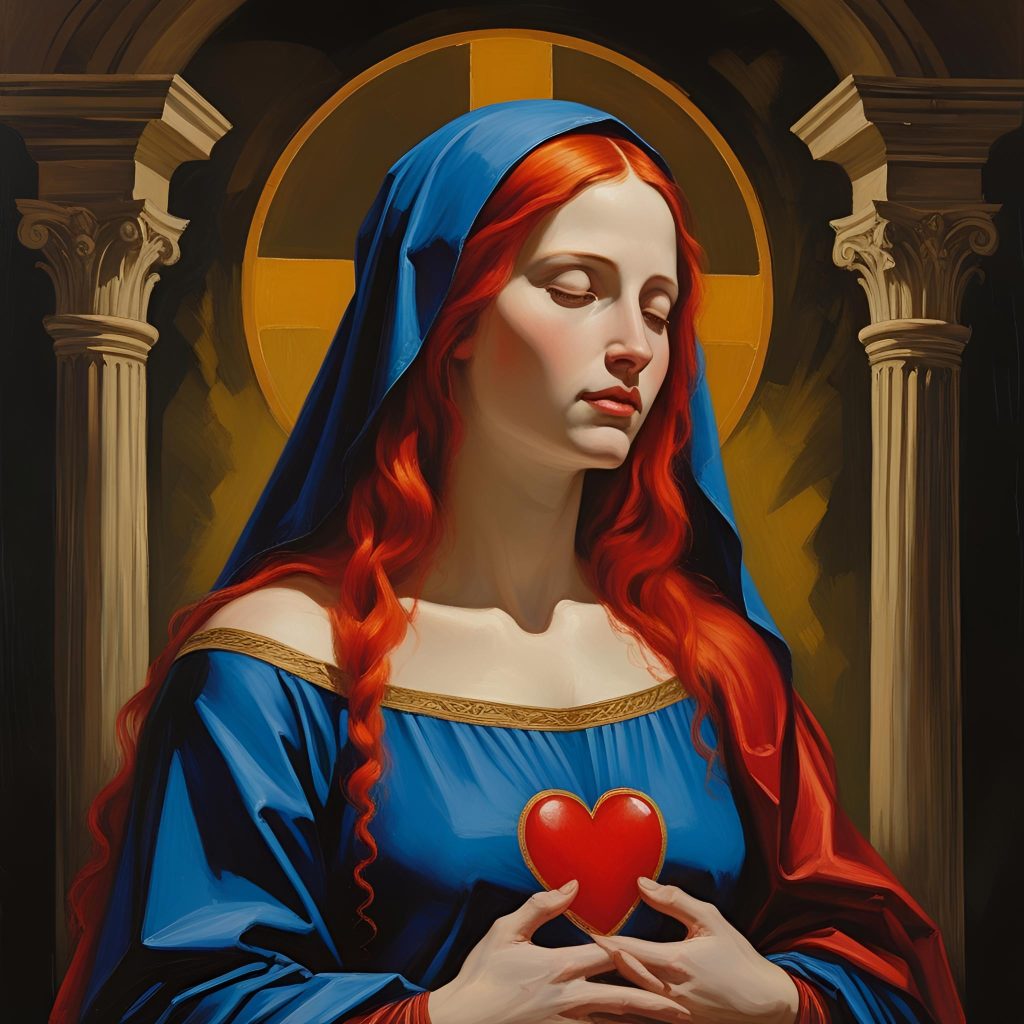
Mary Magdalene at the Garden Tomb—letter in hand, the Heart where the Law is written (Jer 31:33).
For generations, this promise has been heard as the end of doubt and the end of dependence on teachers, priests, prophets, or even on the Bible. As if after Jesus came into the world there would be no need for instruction or reading the Bible, because one’s very own heart would reveal the Law.
But what does this mean? Does this mean people’s hearts — or does this mean Jesus the Woman is the Heart, the Love of Jesus, that people need to have and to hold deep in their own heart?
To answer this, the Hebrew scriptures give us a veiled key. The word Megillah — the “scroll” — is feminine in Hebrew. Five books are called Megillot: Ruth, Esther, Song of Songs, Ecclesiastes, and Lamentations. These feminine scrolls reveal the veiled wisdom of God through a woman’s voice, a woman’s loss, a woman’s longings, and a woman’s courage.
In the Megillah of Ruth, surely it is the Magdalene’s broken heart that beats in Naomi’s. Naomi returns widowed from Moab and laments like a hen (Luke 13:34):
“Do not call me Naomi (sweet and beautiful). Call me Mara (bitter), for the Almighty (El Shaddai) has dealt very bitterly with me.” — Ruth 1:20
The prophets saw in such laments the need for a new covenant, one strong enough to compel the nations to abandon idolatry and return to the living God. The name El Shaddai, as Marc-Alain Ouaknin explains is the Woman’s breast. The breast does not act alone. The Heart provides for the breast, and the Heart lodged within the breast is regulated by the amygdala.
Our amygdala is a small part of the brain, but it has a megillah of a job. The amygdala governs memory and emotion by connecting them with the larger reasoning part of the brain.
This Mara is no passing shadow. She returns to Israel in the Garden of the Tombs at the Resurrection. She is Mary. She is the Magdalene, the Amygdala — the living memory of God’s covenant, where bitterness turns to beautiful blessing, where the restored memory of Israel heals the world.
The very organ in the brain that governs memory and emotion, the amygdala, bears the name Mara. It is here the law is written.
And yet Mary is not alone. She is bound by a covenant to her sister — Martha who also returns to life as promised with the coming of Jesus the Forerunner as his “Almighty housewife. For it is El Shaddai — the Lady of the house of Anna, of Grace, of John — who tends the oikumene, the household of God.
The tension between Martha and Mary resolves when Martha’s Lord reminds Martha that she is indeed Martha, the Lady of the House and that her Sister Mary has chosen the part given to her.
Thus it is because of Mary’s choosing that the womb of God’s covenant tramples down death by death, bestowing life to those in the tombs.
This is no empty claim. For this bestowed is provided for by the Almighty who works with the Gardener, the Husbandman of Creation — the Father, the Black Rock sequestered in the rich dark soil of the Earth. (John 15:1)
Pay Attention: This is the Covenanted Heart of the Gospel: trampling down death by death, bestowing life to those in the tombs. For the Father and his Heart came to earth as human beings reconciled to each other and to Jesus, the New Adam and the New Eve.
Some called this Father Simon, others Joseph — the earthly Father of Jesus, who was engaged to the Mother of Jesus, called the Virgin, the Pure, the Clean, by some and by others the Gate called Beautiful.
It was at the Gate called Beautiful, where Simon called Peter stood with John and first summoned the crippled man saying:
“Look at us.” —Acts 3:4
Jesus is the Gate, the Heart that guides reborn humanity into the Church, where the reborn learn to walk the talk, and where the Almighty housewife and her husband her Lord, bless them with hospitality.
Here at the Gate called Beautiful, the fourfold harmony of the Gospel is revealed with the Name of Jesus of the Branch — the Amygdala, the Hebrew Netzer, interpreted as of Nazareth. (Isaiah 11.1; Jeremiah 1:11)
Together, Mary the Heart, Martha the Breast, Peter the Rock, and the Johannine Rabbi the heralding voice, embody the covenant household of God.
The Heart remembers, the Breast sustains, the Rock protects, and the Voice of Testimony heralds the way. (John 3:28-29: Hebrews 6:19-20)
And yet, how easily people forget and are led astray. Jesus the man called John the Forerunner said of the Magdalene:
“Wherever the gospel is preached throughout the world, what she has done will also be told, in memory of her.” —Mark 14:9
When her role as the Heart is conquered and possessed by demons, the Church loses its way and people backslide — mistaking worldly thinking and power for service, forgetting the importance of forgiveness — silencing the very heart and voice that testifies to the memory of the covenant.
Pay Attention: Repent. Heed the Rooster’s call and know that the Greek Rooster is Alektōr.
Now get on the Mark as in Mark 15:21 and lift up your Cross, the Branch called the Amygdala, the heartbeat and memory of the Gospel—the Light of the World. (John 8:12)
Penitent Peter shows the way to redemption. He gives the Lame Man the name that opens the Gate called Beautiful. And that Gate is the very Heart Jeremiah heralds and lifts up as the prophetic promise of God:
“I will put my law within them, and I will write it on their heart.”— Jeremiah 31:33.
This is the mystery: the prophets saw the True Cross as more than wood and nails — a living letter of God written on the Magdalene’s heart. This Heart is the Magdalene’s heart — clean, pure, and steadfast, clinging always to her Lord, the earthly Father of Jesus.
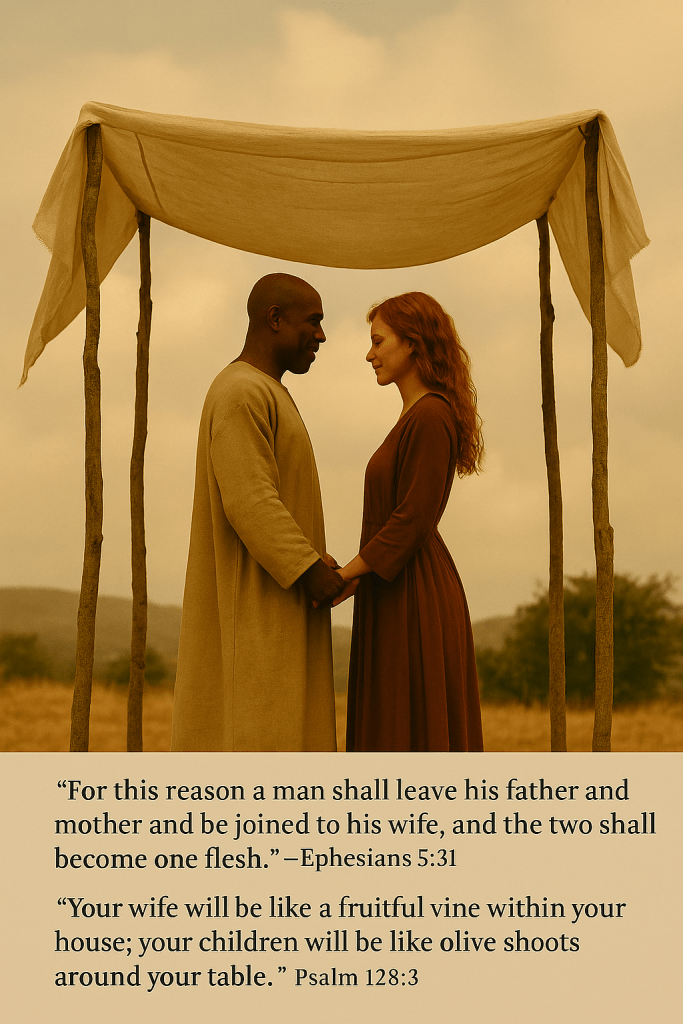
Mary Magdalene — her heart the living Cross. Do you see the wood and nails, as the wedding canopy?
Last Sunday’s Gospel told of the woman who had been bent over for eighteen years (Luke 13:10–17). Many imagine her as physically crippled. But what if her bent form was not her spine, but her faith — burdened, restrained, oppressed by the weight of secular values and the blindness of those who could not recognize the feminine face of God within patriarchal language and imagery.
____________________________
This post is not for the faint of heart — it is X-rated, not in the worldly sense, but in the way of the Cross.

It's for mature readers ready for the meat of the Gospel, not the milk.
The Cross Placed in Her Hands
The Orthodox have long called themselves the “straight” believers; by that measure, all others are bent. I first glimpsed this out near Jericho Beach in Vancouver, where Orthodox voices rose in worship — at the tent, in the plenary, and even at the noonday meal — standing upright in their tradition as though posture itself could keep faith alive.
I came, instead, from a church shaped by modernity — bent in their imagination of God, with prejudice against evangelical believers and, by extension, Orthodox voices. Yet a certain Orthodox theologian saw me differently. In speaking with me face to face, glancing at my name tag, he recognized what others missed: that I stood alone, willing to speak out against the compromises of my church, while still advocating for the feminine face of God I glimpsed through the veil of patriarchal grammar and imagery.
The image of the Woman Jesus called bent is bound up with the number eighteen. For numbers in Scripture are rarely incidental. Seventeen marks the fullness of the womb — the sum of 1 through 17 being 153, the number of the great catch of fish. But eighteen is the turning point — the moment of re-birth, when what was long secreted in the comforting womb of Abrahamic faith is brought forth, standing straight and upright before those who see.
This is why Jesus (the Orthodox Teacher) calls her forward: not to heal, but to redeem her identity and to save that identity from being lost.What was bent is now revealed as straight. What was trapped is broken free.
And as the Woman Jesus herself declares — though patriarchal grammar veils it — “Wisdom is vindicated by all her children” (Luke 7:35).
In this, Jesus speaks as a full citizen, and this is why she is named “he” and portrayed as male — yet still unseen by the blind who cannot recognize her unveiled face.
This is the same summons we hear in the story of Zacchaeus — for Zacchaeus is not just a man up in a tree, but the bent one herself. Zacchaeus in Hebrew means “pure, clean.” It carries the same meaning as Linda in Italian, and in Spanish, Linda means “beautiful.”
Pay attention. The Bent Woman, the Madonna, the Bride are not three separate women. They are the same woman, given different names — the Gate called Beautiful, the almond branch, the Nazar.
As I wrote in What Defines You, one’s name seems to define a person, but families often give nicknames and titles of affection. So it is with the Gospel writers: the many names given to the Woman — like the many names given to Jesus the Teacher and to Simon the Rock — help the disciples glimpse the Bride’s true identity: pure and clean. The Advocate unveiled.
Don’t let patriarchal grammar snare you — “Son of Abraham” names her not as male, but as a full heir of the covenant, male and female together, as pure as newborn babes.
What was bent is not only raised, but reborn — like the waters of the womb breaking open, breaking babes free and giving them life.
Born of water and Spirit (John 3:5), what was hidden is revealed, what was bent is summoned forth to break free.
Breaking free, carried on the spray, she clings to the Rock as she has always done.
Last Sunday’s lectionary made this connection clear: the Bent Woman passage (Luke 13:10–17) was paired with Jeremiah’s call, “Before I formed you in the womb I knew you” (Jeremiah 1:5), and the psalmist’s cry, “The Lord is my rock and my fortress” (Psalm 71:3). Together these two readings stand as pillars — the womb and the rock — anchoring the covenant promise that is now revealed in the Bent Woman, she who now stands straight and upright.
The womb bears life; the rock secures it. Together they steady the soul — as the old hymn sings:
“We have an anchor that keeps the soul, steadfast and sure while the billows roll; fastened to the Rock which cannot move, grounded firm and deep in the Savior’s love.”
Out of that steadfast love, divine love unfolds: like the sea breaking safely on the shore, the dear Lady too is borne forward in hope. The spray carries her until, from the beach, comes the Friend’s call — like the horn that signals safe harbour, at that first breakfast. At last she breaks free — redeemed, claimed by the Rock.
For what a friend she has in Jesus the Teacher, the Friend of the Bride and Bridegroom, who first finds her bent and bound to a man not her husband. Then, broken free, he calls out like a horn blast, sounding like an old Greek rooster, to Simon as he was singing down by the sea — so that he would leap into the water, don his wedding garment, and declare his love, as loud and clear as thunder: “Let there be love,” echoing that first command, “Let there be light.”
Recall how Moses the Teacher of Israel, spoke with God in thunder (Exodus 19:19). For surely it is this thunder that sings the psalmist’s song here in Psalm 71: 17.
“O God, from my youth you have taught me, and I still proclaim your wondrous deeds”
Had the lectionary included this seventeenth verse, perhaps ears would have perked up — as if a thunderclap from heaven, were jolting the hearer awake. For this is the very thunder of Simon the Rock, whose voice resounds with love — and in the very number of the song itself, a pattern thunders.
Seventeen is itself a prime — indivisible, whole — yet it does not stand alone. For in the mystery of numbers, it is paired with nineteen, its spouse, differing by only two. And just as thunder answered Moses in Exodus 19:19, so too this pairing echoes with covenant power.
Pay attention: the prime number pairing acts as a gate, opening the way into covenant mystery. Seventeen flashes as lightning — prime, indivisible and whole. Nineteen answers as thunder, echoing the lightning’s call — “On the morning of the third day there was thunder and lightning, and a pall of smoke, for there was fire… Moses spoke, and God answered him in thunder” (Exodus 19:16–19).
In Roman numerals, nineteen is written XIX — a palindrome, read the same forwards and backwards. The number itself mirrors what it proclaims: distinct yet joined, two becoming one. Spiritually, this difference of two reveals the mystery of covenant. When a man and a woman unite, their exact difference — the two becoming one — defines them as a new creation: “one flesh” (Genesis 2:24). Just as 17 and 19 are distinct yet forever paired by their difference, so too are Bride and Bridegroom forever paired and graced with covenant love.
Before she was called Paul, this crucified Bride was known as Saul — a name that whispers of the shawl that comforts, the pall that covers with dignity, the mantle of the Advocate interceding for the poor and covering the Bride. In time, that mantle was glorified in her, as her Spirit’s Gift revealed her true covenant identity. And so Paul could also write of herself as a nursing mother (1 Thess. 2:7), tending her children in faith.
Paul’s teaching partner, Apollos, confirms this mystery. Born in Alexandria, his very name marks him as Apollo, the light-bringer, whom the Romans nicknamed Phoebus. His wife, remembered as Phoebe in Romans 16:1–2, personifies the name Anna — Grace — the Lady of the House of Grace. By naming her, Paul also nods toward her sister of Bethany, the one who once fretted as she sat at the Teacher’s feet, thus acknowledging that household as part of the covenant story.
Together Apollos and Anna water the seeds Paul plants — I planted, Apollos watered, but God gave the growth (1 Corinthians 3:6). Without the Rock — the source of life, full of carbon — there would be no foundation, no building block of Creation.
But it is Cephas — the Black Rock, God the Father made manifest — who gives the increase.
The Gospel writers sometimes called this Father of Jesus, Joseph, a name that in Hebrew means “may he add, may he increase. Thus, Cephas, named also Joseph ( by the Gospel writers, is revealed as the Bridegroom who belongs to the Bride: the living stone the builders rejected is the living cornerstone revealed. His faith in her and the encouragement of his songs may seem like black magic to some, yet his love for her lets her light shine — “…for no one lights a lamp and hides it under a bushel, but sets it high so that all may see and be guided.”
Thus when Jesus the Orthodox Teacher calls the bent woman to stand from a tangle of oppression, it is not only her release from bondage, but the unveiling of this union: womb and rock, Bride and Bridegroom, joined in covenant love and grace. Here the bent woman herself is revealed as the crucified Bride — the one Paul names in her own flesh, “I have been crucified with Christ” (Galatians 2:19).
As Kazantzakis dares to imagine in St. Francis — a work once charged with blasphemy — the amygdala cries: “forgive me, my sisters, for blooming too soon.” For Bethany is the House of Anna, where the Lady of the House (Martha, in Aramaic, meaning “lady”) welcomes her sister, the Woman Jesus called Mary, who is the Magdalene, the Amygdala. As noted in What Defines You, the names given to these figures reveal Christ —not as separate characters, but in covenant roles of Bride and Bridegroom, in communion with the Orthodox Teacher and his housewife in Bethany — the House of Anna.”
The womb and the rock hold together the covenant plan of love and grace — as steadfast as the household in Bethany, where the Lady of the House opens her doors in welcome.
And it is the Orthodox Teacher — the Forerunner, the Friend of the Bridegroom — who, like a faithful old Greek rooster, alektōr, crows when the light appears.
He heralds both crucifixion and resurrection.
He anchors the soul of the Bride and her children to the Rock.
And he restores hope both inside and outside the Holy of Holies (Hebrews 6:19–20).
“From bent to breaking free — the Bride breathes out her vow.”
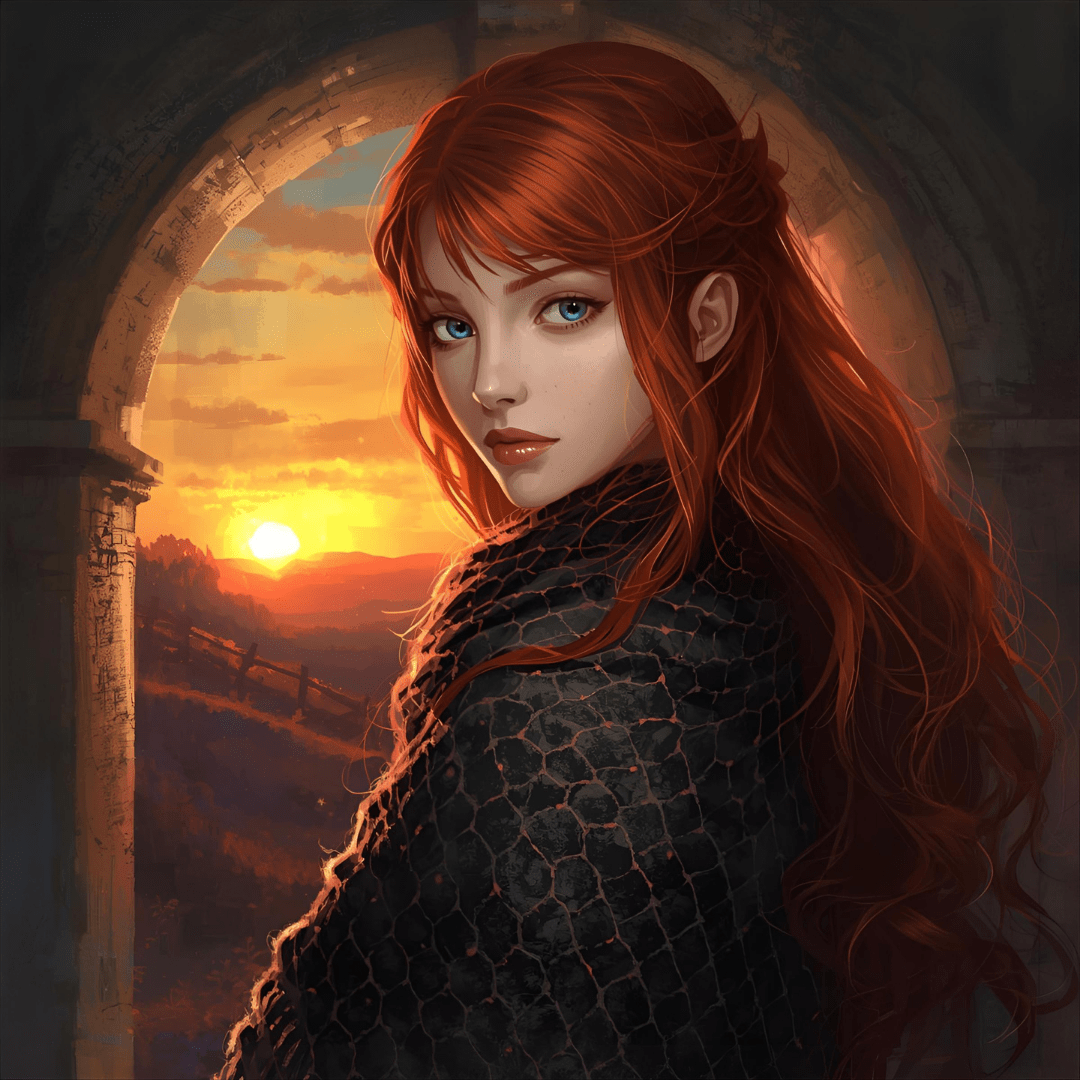
As I wrote in From Tangle to Covenant, the net that had become a tangle and a snare — in Peter’s hands — personifies faithfulness. It rests upon her like a prayer shawl, full of grace and transformative power. In humility, modestly covering her as she prays, it dignifies her with new authority.
From bent to breaking free — the Jesus Woman, Christ the Bride, pledges her troth into Simon Peter’s hands, her promised Rock and Fortress.
She sends the disciples out with the authority and encouragement he gives her.
With the words of the Great Commission:
Go therefore and make disciples of all nations
_____________________________
From bent to breaking free — the Jesus Woman, Christ the Bride, breathes out: —“Into your hands I commit my spirit, Father — for You are my Bridegroom.”
I was prompted to write this reflection after reading a post on The Preacher’s Word, where the question was raised: What defines you?
That question has stayed with me. It has echoed through my mind as I’ve been writing this recent series of blog posts — Priming the Pump, From Tangle to Covenant, The Heartbeat of the Gospel, and The Petition of the Bridegroom. In each one, I’ve been exploring how faith reveals itself in ordinary lives and extraordinary moments.
And yet, for me, the question of what defines a person is not abstract. It is bound up with the memory of my late husband Gordon, who, on the day he drowned in Cuba, left me with an unforgettable sign of how Christ still defines our lives.
Pondering the question: Does Christ define us?
That morning, Gordon was reading Mornings with Henri J.M. Nouwen. He had the habit of underlining passages in red ink—words that spoke to him as a minister, a husband, and a man of faith. The passage he underlined that day was this:
“The challenge of ministry is to help people in very concrete situations—people with illnesses or in grief, people with physical or mental handicaps, people suffering from poverty and oppression, people caught in the complex networks of secular or religious institutions—to see and experience their story as part of God’s ongoing redemptive work in the world. …to create a new unity in which memories that formerly seemed only destructive are now reclaimed as part of a redemptive event.”
I did not know then how those words would become my own lifeline. When Gordon drowned, I felt abandoned by God. Yet later, standing in the morgue, I leaned over his face and whispered, “I’d resurrect you if I could.” And as I spoke, something happened that I did not understand at the time: Gordon drew in one last breath.
Years later, as I studied Greek, I discovered the verb for “suck in” is roufó. Suddenly, that moment came alive again.That after-death inhalation, sucking up a tiny pearl of water, became a visual reminder that it is the Mother of God who is the Womb of Life, and that every breath we draw first comes from our mother. Gordon’s roufó became for me a witness that love itself is never lost, but drawn into God’s redemptive work.
Gordon at Jazz Vespers — the Jazz Priest.
Gordon was proud of the nick name Dal Richards gave him. Dal— known as “Vancouver’s King of Swing”— called Gordon the Jazz Priest. And I called him my “Gordian Knott.” Gordon was a good golfer and an even better knot-tier. He loved connecting people, and he bragged that he had married a thousand wives— like King Solomon. With his death, even his name became a parable for me.
For like the tangled Gordian knot, grief seemed impossible to unravel, and I was impatient. I wanted a definitive answer. Why did he not fight to live and breathe for me, his Lady Love? Yet as I wrote in From Tangle to Covenant, such knots are not patiently undone—they are cut through by a bold act of faith. Saying yes to the Spirit and the Truth, putting on the whole armour of God and living your faith, walking the talk.
That bold stroke is the heartbeat and soul of the Gospel. For me, the stories of Jesus are not distant history; they are as close as the heartbeat and breath of a mother. Yet Gordon’s final breath, paired with Nouwen’s underlined words, became a visual reminder that carried me forward — into faith renewed, anchoring my soul to the hope that I would not remain a widow. In my grief, I felt like a lamenting red hen, longing to gather the faith community that Gordon and I had once nurtured together. Yet with his passing, I also felt the ache of losing my place as a minister’s wife.
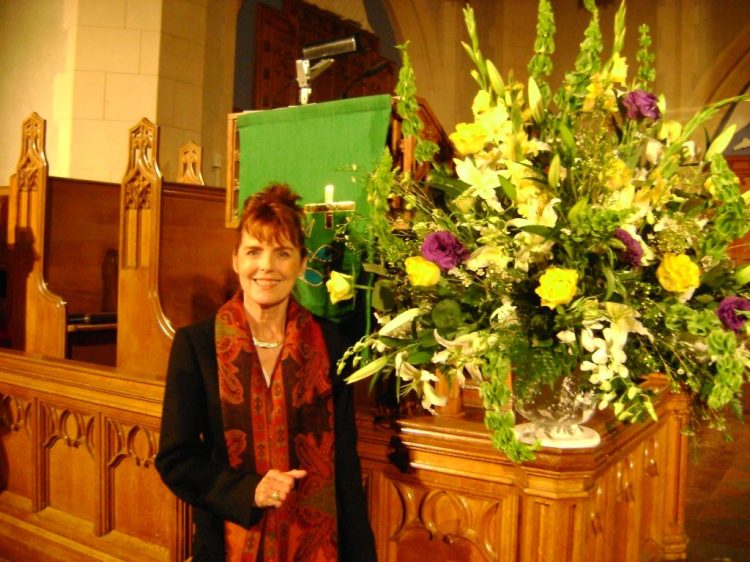
Linda with the fresh fragrance of resurrection, St. Andrew’s —Wesley United Church 2009.
Then I remembered that Jesus herself once lamented over Jerusalem, aching to gather her children under her wings. What people in their sins could only realize in masculine form, I came to realize in fullness: Christ as Mother, belonging to the Father, who lifts her own on eagle’s wings into covenant love. As the Bride belongs to the Bridegroom, embraced and witnessed, so too does Christ in union with other witnesses bring the joy of the world — making the world go ’round (John 3:28–29).
For had Gordon not “fallen asleep by the sea,” I would never have been free to fall in love with my bridegroom. My bridegroom is a Simon. That is not the name his mother and father gave him when he was born. Let me explain. There are nine men in the Gospels named Simon, ten if you include Simeon.
Simon Peter: Simon the Zealot; Simon the brother of Jesus; Simon the Leper; Simon of Cyrene; Simon the Pharisee, Simon Iscariot; Simon the Magus; Simon the Tanner; and Simeon who with Anna the prophetess, was the first to recognize Jesus as the Promised One.
One’s name seems to define a person, but families often give each other nick names, pet names. So it is very likely the Gospel writers named the Promised One with names to help the disciples glimpse the fullness of the Bridegroom’s identity: the One who the witnesses at Lystra described as incarnating Thunder itself, the divine voice paired with Lightning — Mercury, the Star of the Morning — in keeping with the Teacher of Israel who ascended the Mountain of the Lord on the Third Day at Sinai.
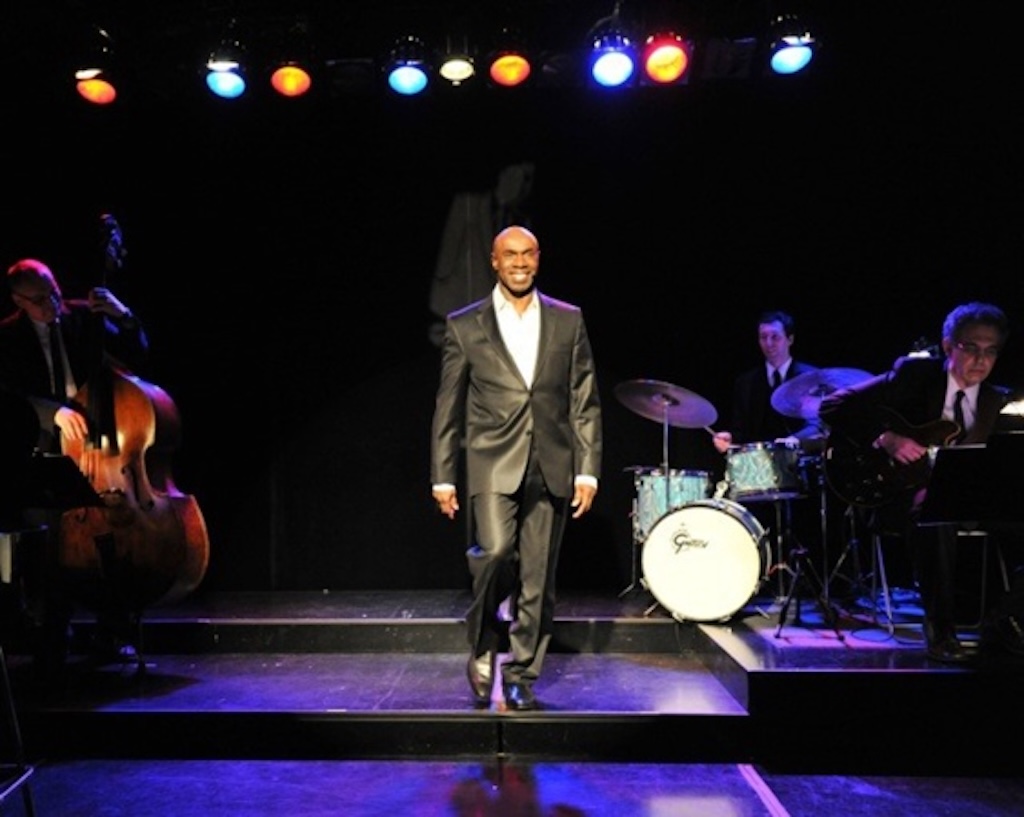
Don Stewart on stage — drawing a thunderous applause. Learn more at donstewart.ca.
My fiancé, Don Stewart — my bridegroom of promise — is the man in my life who listens with his whole body, whose faith and love for me are expressed through his music and the music of other musicians full of Christian memory, some of which may be secreted in the depths of their souls. This music shining light on the Gospel and their beloved Lady brings a thunderous applause. And when my Don agreed to let me dedicate The Ecumenical Affair to him, it was his way of saying: Divine love is what defines us still and it is what makes the world go’ round.
When Gordon drowned, I truly felt as if God had abandoned me. Gordon was an avid golfer. However, that was not what defined him. He was a Minister and a dear friend of Henri Nouwen’s. And so Gordon would say, Christ was defining his life still.
Gordon golfing — remembered with joy at his celebration of life, January 2009.
When I created that bookmark for Gordon’s celebration of life, it was simply my way of honouring his memory. At the time, I did not yet grasp the profound gift secreted in his last breath — a gift I would only come to recognize much later, as if planted like a seed to be revealed in the fullness of time.
It was not the breath of dying, but a breath that came after death had spoken — that after-death inhalation, sucking up a tiny pearl of water, became a visual reminder that it is the Mother of God who is the Womb of Life, and that every breath we draw first comes from our mother.
And in that breath, Gordon was also reminding me — his red-haired Lady, his Rufus — that my destiny was bound to the One who would draw the sword of faith and petition the Governor for me. As Simon of Cyrene carried the Cross of Jesus (Mark 15:21), so too would the Bridegroom of promise waiting for me carry the Cross of Jesus and bring people together in covenant love.
Life, then, is never defined by one fleeting moment alone. It is the Gift of God — like the living water Jesus promised the woman at the well (John 4:10). He did not give it to her directly, but primed her to seek her Nathanael — her soul mate, the promised gift through whom covenant love would be revealed (John 1:47–48). Each breath is that gift, drawn in and poured out again, sometimes sweet, sometimes bittersweet, always touched with mystery. Gordon’s last breath — his roufó — reminded me that our very breath is God’s gift of love.
And so, finding our soul mate, our bridegroom or bride, becomes part of that gift too — a sign of the covenant God weaves into our lives. That is why the box of chocolates, like the old Christmas gifts of coal transformed into sweetness, still speaks: it symbolizes the mystery of love and the promise we are called to cherish and share.
Black Magic chocolates — like the question “Does Christ define us?”, they carry the sweetness and mystery of love, a gift to be cherished and shared.
Christ’s love, like life itself, is both fragile and enduring. It is what defines us still — and it calls us to cherish the Christian promise and share it, drawing a thunderous applause from all who witness and greet this love.“
“The Bride alone is not the Christ, nor is Jesus the Teacher alone the Christ. The Christ is revealed in the union of Bride and Bridegroom, witnessed and embraced. In covenant love, witnessed by others, the fullness of Christ comes alive.”
Christ’s covenant love — fragile yet enduring — is what defines us still. May this love bring you face to face with Christ and your beloved, until we meet again.
This week, my bridegroom has found himself in a place no man should have to sit or stand — humbly petitioning the powers of this world for what should already be his by right.
Petitioning the governor—humbled in scarlet—for the legal right to covenant love.
Without the release of a single file number from Ottawa’s vaults, our upcoming marriage cannot be licensed. It is a position that echoes another scene long remembered in the Gospel — when Joseph of Arimathaea, an honourable counsellor who waited for the kingdom of God, went in boldly to Pilate and begged for the body of Jesus. Few see the courage it takes to sit or stand before authority, not for oneself, but for love’s sake — to claim what belongs to you in covenant, yet rests in another’s hands.
Simon is called to leave his single life behind for the victory of the Third Day.
That call — to carry the cross, standing face to face before Jesus the Forerunner, the Alektōr whose neighbourly crow gathers the Bridegroom, the Bride, and all their kin face to face in covenant faithfulness — is as real today as it was on that morning by the sea.
Even in Roman times, honourable citizens valued monogamous marriage and were free to divorce — but the right to marry again required the proof of proper documentation. While many commoners simply lived together, noble men and women sought the covenant of marriage — to give their children legitimacy, protect their property and inheritance, and provide for a widowed partner.
It was, after all, John the Baptist’s bold challenge of Herod’s unlawful remarriage that cost him his head. Perhaps that is why, in every age, the bridegroom who would claim the bride his soul craves finds himself caught in a tangle of politics, law, and conscience — a knot as stubborn as the legendary Gordian. The old stories tell us such a knot could not be untied by ordinary means; it had to be cut through in a single, decisive stroke of the sword.
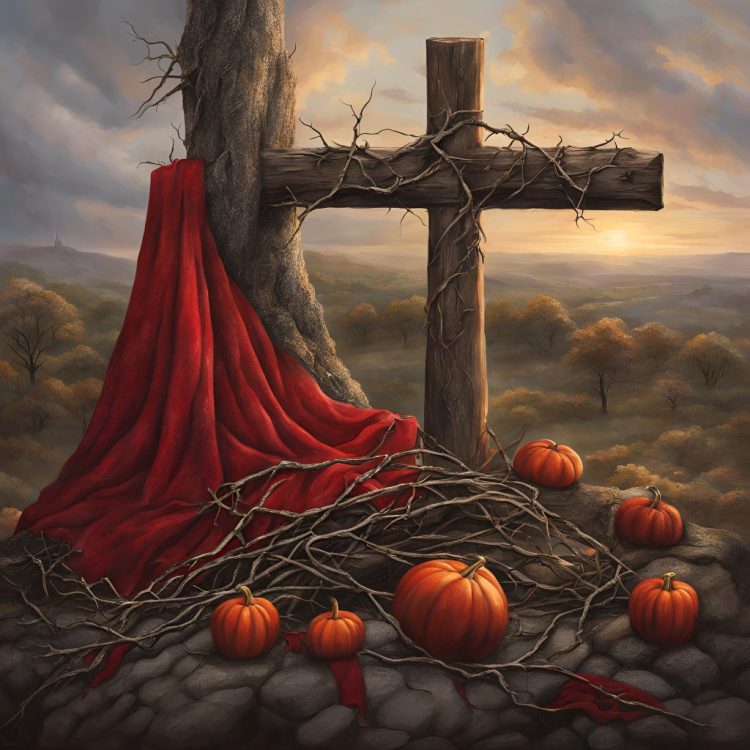
Scarlet, thorns, and gourds — a knot in play as the Alektōr watches.
A robe of scarlet, a crown of thorns, and gourds at the foot — a knot as tight as a ball in play, waiting to be cast to the right side of the boat or court. Like the Gordian knot, it will not yield to patient effort; it must be cut in a single, decisive stroke.
On the distant shore, Alektōr — the rooster who greets the dawn and guards his barnyard — keeps watch to ensure that God’s promise given to the almond branch in Jeremiah’s vision (Jeremiah 1:11), is fulfilled. Will you, like the Bridegroom of faith, take the bold stroke with the sword of the Spirit, rather than wait for the knot to unravel on its own?
“And take the helmet of salvation, and the sword of the Spirit, which is the word of God” (Ephesians 6:17).
Joseph of Arimathea is Simon—because the Gospel writers describe the Bride’s chosen Bridegroom as a man who hears and does the Word of God. In Mark’s Gospel, it is Simon—believed to be a Black man—who carried the cross of Jesus, and who is revealed as Joseph when he took courage and claimed the body of Jesus. Two moments, one man of faith: the cross-bearer whose love for Jesus deepens into bold action.
The Gospel lifts up the cry of the Alektōr—calling us to take up our own cross, act faithfully, and cut through every tangle that keeps us from showing our faith in the Bridegroom and imitating his courage—so that we, too, may be on the Mark when the Rooster crows.
For it is Simon, the Rock, who stands as the building block of the Church—the stone the chief builders stumble over—because they mistake Joseph for just a carpenter shouldering wooden beams, and fail to see him as a bard and entertainer, joined with his Bride, the wise maker of home and temple. The Bride and her chosen Bridegroom have heard the Rooster’s call—his cry breaking the dark before the dawn—and the three bear witness to the Good News: Christ is risen. The Bride belongs forever to the Bridegroom.
Beneath the divine canopy, justice and peace kiss, and heaven and earth bear witness to Christ’s new covenant.
If this glimpse beneath the divine canopy stirs something in you, come and see how the Gospels have preserved this story — of a Bridegroom and Bride whose covenant love transforms hearts, overturns old assumptions, and reveals the kingdom of God. Each of my posts is a step in untangling the knot. Your gifts of grace, hospitality, and faithful discipleship and witness are the foundation on which future generations will stand.
A post on ThePreachersWord left me reflecting on the question: “Are the things I am living for worth Christ dying for?”
It brought to mind Jesus’ words in John 12:24 — “Truly, truly, I say to you, unless a grain of wheat falls into the earth and dies, it remains alone; but if it dies, it bears much fruit.”
Paul reminded the Corinthians that if the dead do not rise, then neither has Christ — and if that’s true, our faith is empty. But because Christ has risen, we have every reason to live with Passion and hope.
My passion? The old hymn says it well: “I love to tell the story of Jesus and His love… ’twill be my theme in glory.”
The love of Jesus isn’t abstract; it has a face — the Woman Jesus called Mary Magdalene.
Mary Magdalene — the woman who loved much, holding the heartbeat of the Gospel.
The following day, in another blog post ThePreachersWord pointed out that when people log in as working from home, but spend their time pursuing personal interests, they are “ghostworking.” He then asked:
“Why do some Christians never seem to grow spiritually? They attend worship services, Bible classes, and some fellowship functions. Yet, little progress has been seen in their lives… Are they, in essence, just ghostworking their discipleship?”
That challenge takes root when we listen for the heartbeat of the Gospel.
For me, the stories of the Gospel are more than distant history; they can be as close as the very breath and heartbeat of the mother who brought us to life, so we could feel the loving hands of our father and recognize his face and authority.
The Rooster — that old Alektor — didn’t call Peter to be a spectator. He called Peter and his hands to be doers and hearers of the Word, to carry the cross daily, and to make a wholehearted commitment to Jesus — as all husbands should do to honour their wives.
And that call still echoes for us today.
If we truly watch and listen with that kind of intimacy, ghostworking in the Kingdom will never be an option — and our own fathers, and husbands who father our children, will be kings in our home and in the kingdom of God with Christ the King of Kings.
Carrying the cross — under the watchful eye of the rooster’s call.
That call — to carry the cross, standing face to face before Jesus the Forerunner, the Alektor, whose neighbourly crow gathers the Bridegroom, the Bride, and all their kin face to face in covenant faithfulness — is as real today as it was on that morning by the sea.
If this reflection speaks to you, I invite you to linger a little longer — follow my blogs & posts as I explore the stories, scriptures, and symbols that keep calling me to reverberate the heartbeat of the Gospel.
For centuries, Peter has been cast as the rough fisherman whose nets overflowed at Jesus’ command.
But what if the “153 fish” was never a fish or numerous fish at all? What if the number was not about the size of the catch at all, but about the Fish itself — marked with a sacred number?
What if that number pointed to the Magdalene — the womb of life — and to Peter himself, not as a fisherman, but perhaps a bard, an entertainer some thought was magical… and as the Bridegroom?
It was morning on the Sea of Tiberias. The air still held the heaviness of night. Peter’s net — his network of fellow workers, his “hands” — hung limp and empty, sagging with the weight of failure. Making a living by the sea was hard. Entertaining fishers and working stiffs was no easier. The men and women toiled in darkness, and after expenses and taxes, nothing was left to take home.
The gospel story, bound tight, awaiting a thunderous voice and hands to release it.
Then a voice from the shore — a voice Peter knew yet dared not name — called out, “Cast your net on the right side of the boat.”
The net Peter held and lifted up with the help of his lead hands was tangled into a giant ball—like the legendary Gordian Knot… tightly woven, defying anyone to untangle it. Yet that old Alektor — people claimed was divine — thought he could simply use his sword.
Wisdom is indeed vindicated by her children who know that the number given — 153 — to the big fish that swallowed Jonah adds to the tangled net Peter and his hands struggled with in the dark… as they worked and lived by the sea.
In the dark, living down by the Sea — without having a priestly education — Peter had seen and heard how the boat builders and the sailors and bards and even the athletes of old Greece and Rome could toss a ball and have it land on the right side of the court… or boat. He knew how the priestly class bragged about how the Teacher of Israel had fashioned a Golden Lamp Stand by hammering gold into the shape of the Amygdala… and how they kept her behind the curtain in the Holy of Holies, so that only the priests could share her light with the common people such as him and his pals.
As Peter worked in the dark, people were waiting for him to toss this tangled net — that he and his hands held as if it were their mother’s last breath — on the right side of the boat.
The net was the gospel story itself, knotted with interpretations the priestly had long guarded as sacred, held and held as though letting go would be a sin.
He could hear voices in the boat and in the pubs, arguing and complaining.
The mathematicians had long ago declared the 153 as the Vesica Piscis — the mother of all life — and proclaimed the flower of life, created from this ratio of 153/265, as sacred geometry.
Sacred geometry: the Vesica Piscis and the Flower of Life — echoes of the 153/265 ratio.
So the question may be welling up in you, even as you read this post: What good will it do if I see and hear Peter affirm his love for Jesus? Will that make a difference in my life? Will that put food on my table?
And yet, when Peter heard that voice from the shore urging him to cast his net on the right side of the boat, he knew it was more than fishing advice — it was a summons to take up the robe of the Bridegroom. He remembered the old songs and stories that told how the Greek letters spelling “The Magdalene” carried the value 153. And like any schoolchild, he knew that adding the numbers 1 through 17 would give the same total — the number marked on the great fish of covenant and repentance.
So is it any wonder that in the seventeenth verse, the author of John has Peter and his Bride speak their love?
A love named three times — not as a formula, but as a restoration.
A love spoken in the dawning light, reminding their followers to honour their father and mother so that they would live long in the land.
And those still fishing in the dark, hoping for a catch that they can sell, will say:
“Oh, that is merely a coincidence. Everyone knows that Peter’s love for Jesus was strictly platonic.”
Hooked on covenant — the almond flower, catch of the day
It took me 40 years to realize the gift of God—the one the Teacher of John spoke of when he encountered the Woman at the Well of Sum Maria.
“If you knew the gift of God, and who it is that is saying to you, ‘Give me a drink,’ you would have asked him, and he would have given you living water.” —John 4:10
This verse—so often quoted—holds a hidden treasure in a single small word: “and.” The Teacher does not say: If you knew who I am—the gift of God. He says: If you knew the gift of God, and who is speaking with you…
That tiny conjunction reveals something profound. The Gift of God is not the man asking for a drink. The gift and the speaker are two distinct realities. The gift is something else—someone else—yet to be found.
Who Is the Gift?
The Gospel of John is deliberate in its naming. And one name stands out, easily overlooked: Nathanael.
His name means “God has given” or “Gift of God.”
In John 1:47, Jesus declares Nathanael “a true Israelite, in whom there is no deceit.”
In John 21:2, he is again named—this time in connection with Cana, the place of the first wedding feast. This matters.
So why does the Woman suppose the Teacher is the gift?
Because he primes the pump. He draws her out—into the Noon Day Sun and awakens the deep well inside her. He does not give her a physical cup of water—but he gives her what no man had ever given her before: permission to seek, to ask, to believe she is worthy of the promise… to Love and be truly loved in return.
According to John, the Teacher is Not the Christ
This is difficult to hear—let alone explain—so his disciples must listen if they have ears!
The Teacher of John—who speaks in riddles, who prepares the way, who rejoices at the Bridegroom’s voice—is not the Christ.
He says it himself:
“You yourselves bear me witness, that I said, ‘I am not the Christ, but I have been sent before him.’” —John 3:28
And again, in the same breath:
“The bride belongs to the bridegroom. The friend of the bridegroom, who stands and listens for him, rejoices greatly at the bridegroom’s voice.”
The Teacher is the Forerunner— The friend of the Bridegroom, not the Bridegroom himself. He is the Baptist, the Son of the Father, The one sent to prepare the way.
He does not give the woman living water. Not yet.
Instead, he primes her—like an old village pump needing a few strokes to clear the air from her pipe before water can rise. He draws out her confession, she’s had five husbands who have forsaken her, and the one she is with is not really her husband.
She is not yet the source. She is the empty vessel. The well that has not yet begun to flow.
But once she recognizes the Gift of God, and he her. Then he—the true Bridegroom—will give her living water. And it will become a spring within her— Ever-flowing. Ever-renewing. A river rising up from the depths of her own being.
Only then does she become the well. Because the Teacher in his asking if you knew who asked you for a drink, primed her spirit to go and seek.
Seeking to know more about the man she just met— She asks: “Could this be TheBridegroom? My Lord? Or is there another?
And then Nathanael comes along.
Was Nathanael—the Gift of God? The one who would give her the water she was thirsting for?
Under the Fig Tree
“Before Philip called you, when you were under the fig tree, I saw you.” —John 1:48
Nathanael is found under the fig tree— The very tree where Adam once hid from the Father in the Garden.
And as the Woman drinks in these words, the truth begins to well up inside her.
Could it be?
Nathanael is the Christ— The Everlasting Father Isaiah spoke of. The Rock her soul has clung to since the beginning of time.
The one who was with her, even after the fall— when she was lost, when she was thirsty, when she couldn’t remember who she was.
And the Teacher? Yes—he is Christ, the Son of God, the one born again of the Father, the New Adam, the one who saw Nathanael under the fig tree.
But he is not the Christ who is the Bride— who belongs to the Bridegroom.
The Teacher of John is the Christ who comes ahead— To prepare the way. To prime the well …with a cup of water, to drive out the demons, the air, keeping her water from flowing.
“Primed…the water of memory begins to push out lifeless air, bringing forth the living water of resurrection.”
He is not the Gardener, her husbandman. He is Jesus of Nazareth, the Son of Joseph.
And She? Well she is La Source. She is Maria. She is the Magdalene. The Amygdala, the almond branch.
Her faith is what makes her PURE.
The light hidden behind the veil hammered and shaped into a golden lamp stand for the Holy of Holies.
Thus as The Teacher of John comes out of the tomb
He calls her to spring forth and blossom, so that she might become the Christ who is the Bride— and be re-joined to her Lord, her true husbandman, the Gift of God
She has always clung to and as the Teacher and his disciples gathered at Bethany watch:
Nathanael, the father of Jesus of Nazareth—called Joseph, also known as Barnabas —takes his Bride’s hand. And a new covenant is read aloud, beneath the almond branch in bloom.
✦ ✦ ✦
This reflection has taken me 40 years to write. It isn’t meant to stir controversy—but to stir the waters. If your heart is moved and you’d like to go deeper, I welcome invitations to break bread and share more with your community or congregation.
The Gift of God is not what I imagined forty years ago. And yet… can’t you see?
He has always been with us—waiting for his children to discover him… under the fig tree.
Attending a little worship service yesterday at Bethany-Newton United Church in Surrey, I heard Luke’s rendition of John’s story—the one where Simon Peter casts his nets into the deep. Only this time, I heard it in a slower, more pondersome way.
That word—pondersome—is rarely used today. But I’m using it on purpose.
Because it is important to think deeply about Simon and Jesus, out there on the edge of a pond—the one that came to be known as the Prince’s Garden, or more commonly today, Lake Gennesaret.
And perhaps Luke is recording this story as if Simon were just a fisherman, tossing out literal nets. But what if Simon was something more—a bard on the beach, an entertainer or street magician, eking out a living in the public houses and tide-washed corners of the valley?
So perhaps Luke envisions Simon as the Son of Man, as the bard who wove together networks of artists and seekers, not strands of rope. One whose very fissure—that inner cleft where longing lives—was a lonely space: the very place the Cross, like the Amygdala, would one day fill.
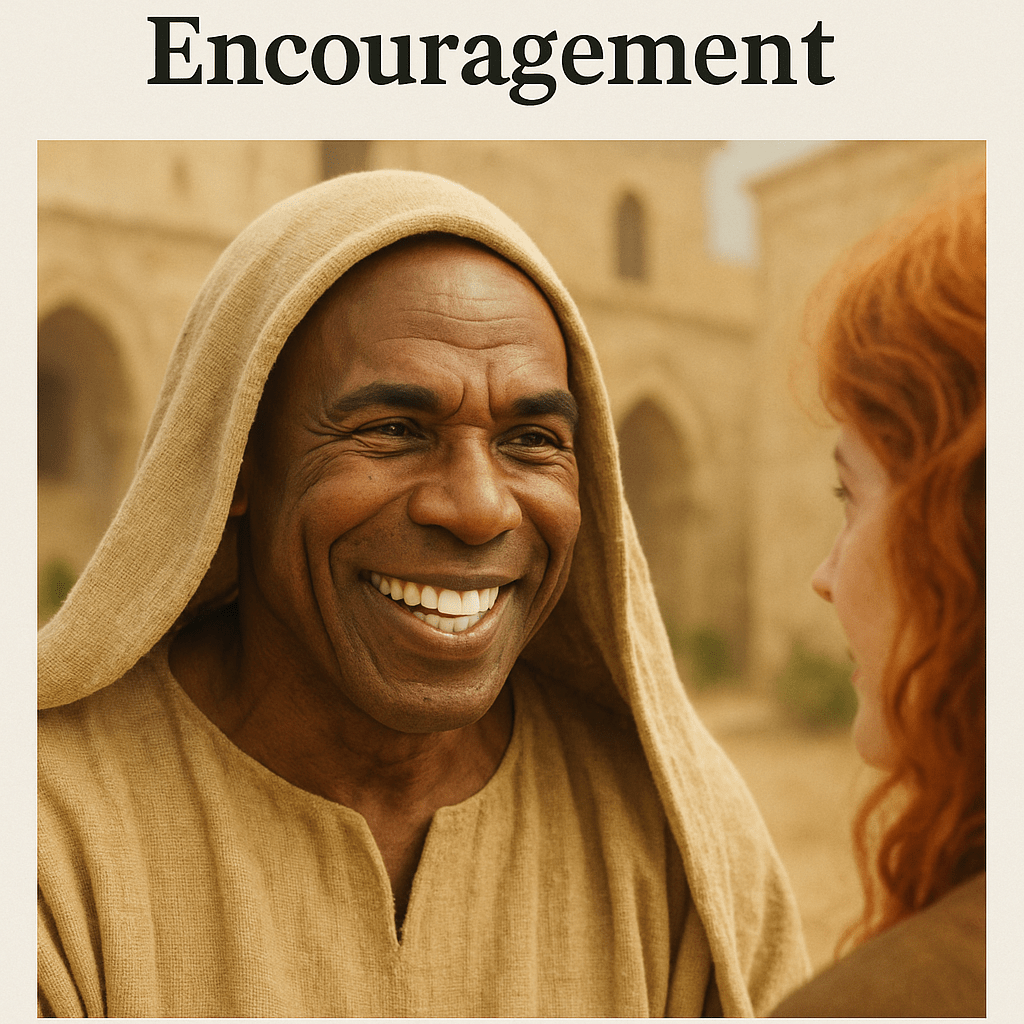
Encourager, Bard, and Bridegroom—Simon stands at the shore, singing of love, light, and the gathering storm.
For falling in love is a marvelous thing. It does bring heartache and sorrow at times. But when two people cleave to one another—truly commit—they discover the greatest lesson of all: to love and be loved in return—as the bard Nat King Cole once crooned.
Other times when I’ve heard this story, I saw Simon simply as an ordinary fisherman, not as a bard, but merely as someone fishing and mending nets, and Jesus standing on the shore as an authoritative teacher. I saw two boats and just assumed this was a very typical and familiar scene.
More importantly, I missed the moment when Jesus got into Simon’s boat.
But yesterday, it was like cataracts had cleared my vision. I suddenly heard the phrase “in the same boat” to mean more than just being together. That phrase called out to me and pushed me to enter into Simon’s struggle, to see the plight of the poor and experience the unpleasant situation of those who are eking out a living, out on the margins—at the edge of a garden that belongs to the Prince.
And maybe, just maybe, it also means entering into the boat with those whose lives have been marked by judgment—because of their race, or their poverty, or their relationships.
Perhaps even with someone whose mother-in-law is ill, because of Jesus’ radical teaching that to divorce and remarry is to commit adultery—which would have made Simon’s household not just humble, but scandalous.
Now, dear reader, you might be wondering:
“Linda, what are you smoking? This story has nothing to do with divorce. Why go there?”
But let’s not forget: The Law of Moses said adulterers should be stoned. Still who ever heard of fishermen catching fish with stones? And yet, didn’t Jesus—when confronted with this law—turn it on its head?
“Let the one without sin cast the first stone.” When no one could, Jesus the male teacher turned to the woman brought in for questioning and asked:
“Has no one condemned you?” “No one, sir,” she said. “Then neither do I. Go and sin no more.”
In the very next verse, Jesus—the one identified as the Christ—by the crowd who do not know the Law, says:
“I am the Light of the World.”
To those who see and hear John’s testimony of John 3:28 clearly, the one the crowd identified is the Christ—the Bride who belongs to the Bridegroom.
But Simon? Simon wants to make sure everyone knows he’s a sinful man—engaged to the Master.
Maybe that’s why the boat feels too heavy, too pondersome to bear.
Maybe the disciples still think the Master must be a man—not the woman who has mastered the art of homemaking, of storytelling, of seeing light in dark places.
And storytellers and bards? They know how to listen to lyrics—how to hear what others miss.
🎶 Consider the lyrics of Bob Dylan’s “Rainy Day Women”:
“They’ll stone you when you’re trying to be so good… They’ll stone you just like they said they would… But I would not feel so all alone— Everybody must get stoned.”
At first glance, many hear this and think of getting high—stoned on Mary Jane, commonly thought of as weed—that calms the nerves and sparks insight.
But those who have learned their lessons well know another kind of stoning:
The kind that marks the end of the single life—the old pursuit of fishing for a mate, a one night stand, or merely wandering alone in the dark, no longer half-hearted, but fully committed.
The kind of stoning that prepares a soul to be born again by the Light of the World, not just committed to a partner—but committed to Christ the Rock, the adult male Jesus—the Bride chose to be the foundation of her Church.
And if we linger here a moment longer, we’ll notice: there isn’t just one boat in Luke’s story. Luke tells us there were two boats, and the sons of Zebedee were in the other—James and John, whom Jesus would later call the Sons of Thunder.
The Sons of Thunder is not just a poetic nickname, but a revelation:
Thunder is the Our Father—the one who listens to and answers Lightning’s spark, who reverberates with creative power as He did so in the beginning:
“Let there be light.”
Can you hear Simon? The one who fell at Jesus’ feet and cried, “Depart from me, Master, for I am a sinful man.”
Surely this cry was not cowardice. It was Thunder responding with humility to Lightning—not fleeing the Light, but trembling before it. Pondering and reflecting on the streams of living water filling his dark life…asking how can this be?
And yet in time, Simon comes to himself and accepts that he is the voice that booms forth from a dark cloud full of rain. He is the one whose soul was full of pondering. Who felt truly humble, unworthy, poor and powerless.
He is the Rock and the fissure, where the Cross plants herself in hope. He is the one who denied that “anyone” could grasp the nature of God.
And yet, when Simon heard the Rooster crow, and felt the testimony of John stir deep within his soul, he knew—he was being called as the God Father of a multitude, and to don his morning coat, his wedding garment that he had once taken off.
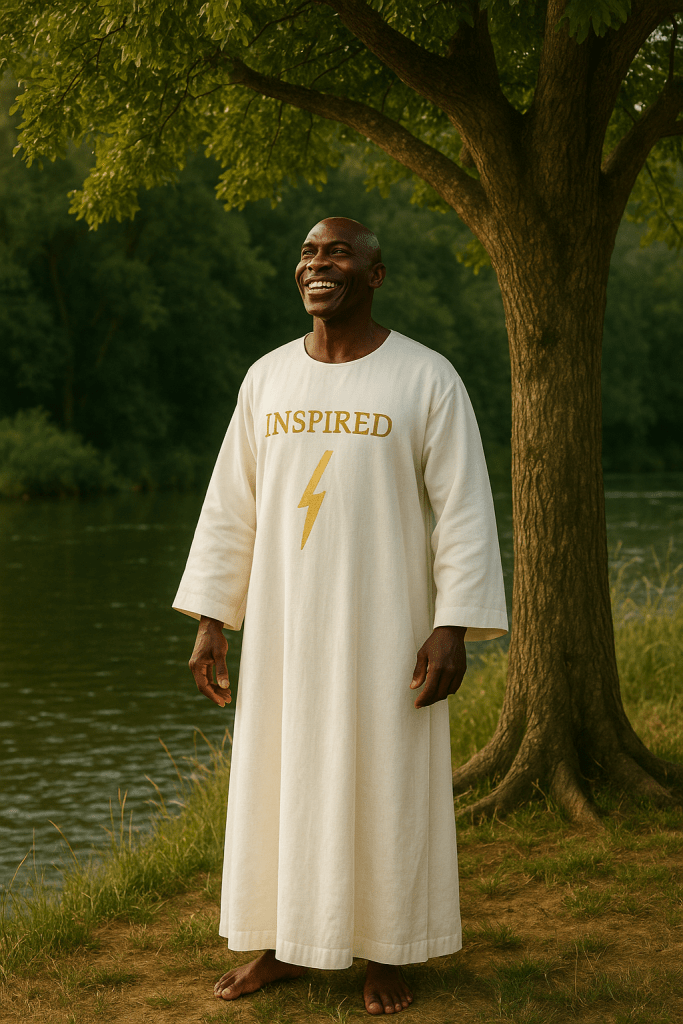
Simon, the Bridegroom Bard—robed in white beneath the Tree of Life.
Washed, inspired, and ready.
He was going to get stoned and not feel so alone.
He was going to bring hope to rainy day women He was going to get married.













 Linda Vogt Turner